Discover the Night: International Dark Sky Week 2021 – April 5 -12

Have you ever vacationed or visited a remote or rural destination and wondered why you felt particularly refreshed or rested afterwards?  Have you marveled at the starry skies and thought to yourself “Why are the stars so much brighter here?”  Have you wondered why it has become the norm to leave outdoor lights on through the night and so endanger not only our own nighttime heritage, but also cause serious environmental consequences for humans, wildlife and our planet?

Help make a difference. Turn out your lights and encourage your friends and neighbors to do the same. Join the Ewing Green Team in addressing this issue during International Dark Skies Week (April 5th – 12th) and every night and help to reclaim our nighttime heritage.

Light Pollution Matters

The nighttime environment is a crucial natural resource for all life on Earth, but the glow of uncontrolled outdoor lighting has hidden the stars, radically changing the nighttime environment.

Before the advent of electric light in the 20th century, our ancestors experienced a night sky brimming with stars that inspired science, religion, philosophy, art, and literature. (Think of van Gogh’s Starry Night.)

The common heritage of a natural night sky is rapidly becoming unknown to the newest generations. In fact, millions of children across the globe will never see the Milky Way from their own homes.

We are only just beginning to understand the negative repercussions of losing this natural resource. A growing body of research suggests that the loss of the natural nighttime environment is causing serious harm to human health and the environment.

Light Pollution Threatens Wildlife

For billions of years, life has relied on Earth’s day-night rhythm to govern life-sustaining behaviors. It’s encoded in the DNA of all plants and animals. Humans have radically disrupted this cycle by lighting up the night. Research shows that artificial light at night has negative and deadly effects on many species.

Sea turtles live in the ocean but hatch on the beach at night. Hatchlings find the sea by detecting the bright horizon over the ocean. Artificial lights can draw them away from the sea, stranding them on land. In Florida alone, millions of hatchlings die this way every year. Many insects are drawn to light, but artificial lights can create a fatal attraction. Think of the fireflies that used to dance around by the millions on lawns in our youth.  Or even the bug-splattered windshields of our cars that traversed the nights.  Where are they now? 

Declining insect populations negatively impact all species that rely on insects for food or pollination. Nocturnal mammals sleep in the day and are active at night. Light pollution disrupts their nighttime environment.

Artificial lights also endanger many bird species. They can disrupt the migratory schedules of birds causing them to leave too early or too late in the season, missing ideal conditions for nesting. Birds that navigate by moonlight and starlight can wander off course. Millions die every year by colliding into illuminated buildings.

Light Pollution Threatens Human Health

Humans are not immune to the negative effects of light in their nighttime spaces. Excessive exposure to artificial light at night, particularly blue light, has been linked to increased risks for obesity, depression, sleep disorders, diabetes and breast cancer.

Light Pollution Wastes Energy and Money

In the U.S. alone, there are about 162 million public and commercial outdoor light fixtures including

  • 45 million streetlights,
  • 52 million parking-lot lights,
  • 62 million lights on commercial buildings.

Residential outdoor lighting isn’t as bright, but there’s a lot more of it — about 1 billion light fixtures.

Lighting consumes lots of energy. In an average year in the U.S., outdoor lighting uses some 120 terawatt-hours of energy, mostly to illuminate streets and parking lots. That’s enough energy to meet New York City’s total electricity needs for 2 years! Excessive light at night causes light pollution and unnecessary greenhouse gas emissions, contributing to climate change.

So, let’s stop wasting so much energy! With so much lighting, even modest efforts to control outdoor lighting saves money, reduces carbon emissions, and helps the environment. We do need some light at night, but much of it is wasted by lights that are overly bright or left on when not needed. Unshielded fixtures waste the most energy. Their light shines upward, instead of down on the ground where it’s needed. At least 30% of outdoor light is wasted. That adds up to $3.3 billion and the release of 21 million tons of CO2 per year! To offset all that CO2, we’d have to plant 875 million trees annually.

But Don’t We Need Nighttime Lighting for Safety & Security?

There is no clear scientific evidence that increased outdoor lighting deters crime. It may make us feel safer, but it does not make us safer. The truth is bad outdoor lighting can decrease safety by making victims and property easier to see.

Glare from overly bright, unshielded lighting creates shadows in which criminals can hide. It also shines directly into our eyes, constricting our pupils. This diminishes the ability of our eyes to adapt to low-light conditions and leads to poorer nighttime vision, dangerous to motorists and pedestrians alike.

What Can Be Done?

The EGT is regularly asked: “What can I do to make a difference?” Well, here is one way that you can make a contribution.  The good news is that light pollution is reversible and its solutions are immediate, simple and cost-effective. Here are a few simple things you can do to confront the problem and take back the night:

  • Check around your home. Use only fully shielded, dark sky friendly fixtures for all outdoor lighting, so lights shine down, not up, to minimize “light trespass” beyond your property lines.
  • Use only the right amount of light needed. Too much light is wasteful, harms wildlife and creates glare.
  • Install timers and dimmer switches and turn off lights when not in use. If you must have security lighting, use motion sensors.
  • Use only lighting with a color temperature of 3000K and below. This means that there is less blue (cool) light that is more harmful to many animal species.

Check out this resource page on outdoor lighting basics.

Talk to neighbors. Explain that poorly shielded fixtures waste energy, produce glare and reduce visibility. Work with your local governments to ensure outdoor lighting isn’t harming the wildlife in your area.

Become a Citizen Scientist with Globe at Night and document light pollution in your neighborhood and share the results. Doing so, contributes to a global database of light pollution measurements.

[Resources and background materials for this article come from The International Dark Sky Association, a 501(c)(3) non-profit organization based in Tucson, Arizona. For 25 years, it has advocated for the protection of the nighttime environment and dark night skies by educating policymakers and the public about night sky conservation and promoting environmentally responsible outdoor lighting. More information about IDA and its mission may be found at http://www.darksky.org.]

Spring Clean Up: Done Sustainably | Done Right

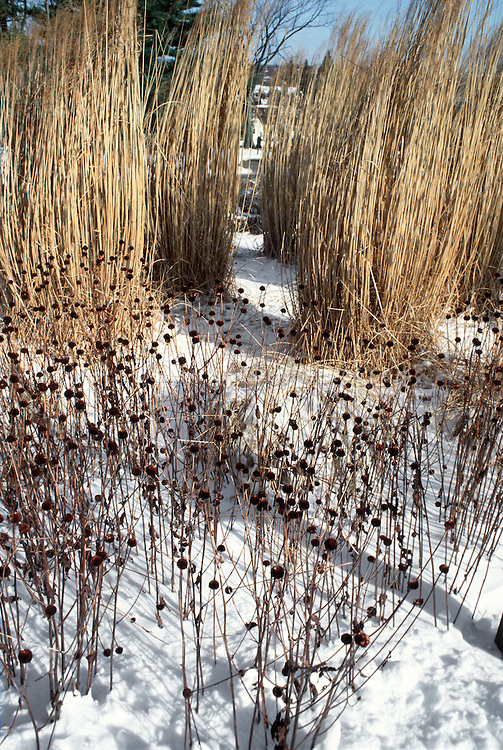
Now that spring is finally here, we are all anxious to head back outside and get the yard in shape.  If you have read our previous posts, we’ve encouraged you to not be quite so perfect every autumn during your cleanup.  There are ecological benefits to adopting somewhat “messy” landscaping practices in the fall and providing habitat for overwintering insects and supporting wildlife while doing so.  Likewise, we encourage you to take it slow and safe during your spring garden cleanup.

So, if you resisted the urge in the fall to be overly tidy and left stalks with dried flower heads and native grasses standing over the winter, how soon is too soon to begin your spring cleanup?  

Overwintering Insects

Gardening in the wildlife garden requires a change of mindset and a bit of patience while we wait for warmer weather to allow overwintering insects a chance to wake up from their winter nap and to move on.  Lots of beneficials such as tiny native bees, parasitic wasps, lacewings, and syrphid flies have spent their winter safe in your habitat garden in your hollowed plants stems.  Cutting them down too early before they have the chance to emerge, will undo that effort.  Wait as long as you can to begin; at least for several 50° days.   Be prepared for weather fluctuations and their impact upon your habitat garden.   

Of course, the best time to remove dried stalks and grasses is before it becomes difficult to remove them without damaging new growth.  But be on the lookout for overwintering chrysalises, partially grown caterpillars curled up in leaves, or microscopic eggs on plant materials.  I remove dried flower stalks and grasses; but leave them lying about for a bit or place on top of your brush or compost pile to give insects a chance to wake up and move on.

Leaves

Raking leaves out of the beds is also a bit of a no-no as they still provide late winter/early spring protection and will break down and build up your soil.  I leave the as many of the leaves in my beds as undisturbed as possible while still being sensitive to the overall appearance of the garden, particularly near hardscaping.  The leaves in the back of the beds will remain untouched but the top loose layer of those near the front will be collected and eventually chopped up (along with those dried flower stalks and grasses) and returned as mulch to the garden in another month or so.  This is not the purist approach, but one that I can live with balancing the needs to protect wildlife while gardening in a residential neighborhood.

Pruning

Be careful with early spring pruning.  You don’t want to prune out any chrysalises or cocoons.  Leave them in place for a while.  You can always cut back later in the season.

Mulching

Be careful that you don’t mulch too soon.  Conventional garden wisdom holds that applying mulch too early, while easier, keeps the soil cooler and thus inhibits plant growth early in the season.  Those who garden for wildlife also want to wait for insects that overwinter in the soil such as hummingbird clearwing moths and many of our native bees to wake up and move on.  Mulching too early in spring may block their emergence.

Giving Perennials Time and Weeding

After that, the bones of the garden are laid bare.  Take your time with planting new plants and putting down mulch.   Let your perennials emerge lest you dig up something you’ll regret.  As the weather warms in April, it’s also a great time to tackle the weeds before they take over.  Ground Ivy, Lesser Celandine and Bishop’s Weed are thugs in my garden.  Try to get a jump on your garden thugs early.

Lawn Removal – Yes, please.

Now’s the time to plan for a new garden if you didn’t do it last fall.  I’ve about run out of lawn to remove and plant, but please do it if you can.  Lawn contributes nothing of ecological value for the wildlife garden.

Take Stock

Spring is also a great time to take stock.  What needs to be divided?  What didn’t make it?  What could be moved where?  And, of course, what can I buy?  As I am newer to gardening for wildlife, my garden still has a lot of exotics that don’t pull their weight and contribute to the food web.  Little by little I am weeding out those non-contributors and adding native plants that do more for wildlife.  If I see holes in my leaves and other imperfections, I am learning to look at them as not imperfections in an unsustainable goal, but rather as a way of providing life sustaining support for the myriad creatures in Mother Nature’s food web.   As more than half of the world’s wildlife has vanished since 1970[1], creating habitat in residential neighborhoods by gardening for wildlife is critical to our planet’s ability to support our way of life.

As I do my planning for the coming season, I need to consider those remaining non-natives in my garden that are invasive and really do need to be removed.  For example, most of us love the contrast provided by Crimson Barberry in the garden; but it is seriously invasive and really needs to go.  Something with berries perhaps to feed the birds, or a great host plant for butterflies? Look for the EGT/EEC flyer A Dirty Dozen of Invasive Species in NJ (sold commercially)  for common invasive plants and recommendations for substitutes.

For additional assistance check our EGT/EEC flyer Sustainable Spring Landscaping Tips.   We also recommend the Garden for Wildlife program of the National Wildlife Federation as a wonderful resource.  Follow their tips and certify your garden as a wildlife habitat.

The best part about gardening for wildlife is that it is supports a somewhat laid-back approach to gardening.  Sure, there are garden chores to be done; but they are not as intense and unsustainable as the scraping the ground clean each season, buying and applying mulch, fertilizing, applying pesticides, deadheading… approach.  Mother Nature will take care of a lot for us as gardeners and our native creatures if we just let her.  That works for me and, I hope, for the countless displaced wildlife that desperately need a home.

[1] Source:  Living Planet Report 2016 by World Wildlife Fund  
http://awsassets.panda.org/downloads/lpr_living_planet_report_2016.pdf

We Need YOU for our 2021 Stream Cleanup!

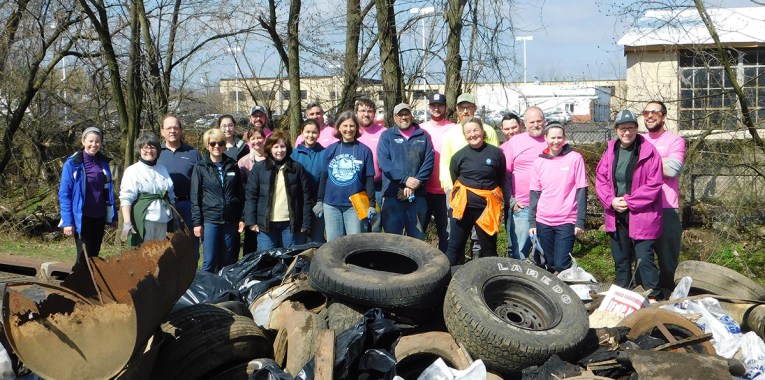
It’s that time of year again, time for spring cleaning! The Ewing Green Team has partnered with The Watershed Institute and Mayor Bert Steinmann to host a spring Stream Cleanup at the Hollowbrook Community Center.

Ewing

The Hollowbrook Community Center backs up to a beautiful stretch of the Shabakunk Creek, a tributary of Assunpink Creek. Water makes its way from the Shabakunk to the Assunpink, ultimately flowing to the Delaware River, the source of our Ewing drinking water. Friends and neighbors, let’s gather safely to clean up our community and make our watershed a healthier and even lovelier environment.

Saturday, April 24, 2021 Stream Cleanup Details

Hollowbrook Community Center

320 Hollowbrook Road

Ewing, NJ 08628

Pre-registration is required.

We are offering staggered start times to accommodate two groups of volunteers.

9:00am to 10:00am participants may register here

10:00am to 11:00am participants may register here

The cleanup is a rain or shine event. Please bring your own gloves and (reusable!) water bottle. Trash bags will be provided. Long pants and closed-toed shoes are suggested for woodier areas. The Hollowbrook grounds are often muddy closer to the creek, participants may be most comfortable wearing rain boots or similar waterproof shoes.

Masks, social distancing, and adult attendance are required. A parent or legal guardian is required to attend with all children. Children ages 2 and older must wear a mask at all times.

The stream cleanup policies and waiver can be read here.

We look forward to spring cleaning with all of you on April 24th!

MCIA Hazardous Waste Disposal Day on Saturday, March 27th

The MCIA will be running its first Household Waste and Electronics Disposal Day of the year on Saturday, March 27th  from 8 a.m. – 2 p.m.  It will be held at John T. Dempster Fire School, Lawrence Station Rd in Lawrence Twp.

Accepted for recycling are the following:

Aerosol Cans | Used Motor Oil |Propane Gas Tanks | Pesticides & Herbicides | Car Batteries | Paint Thinner | Oil Based Paint | Stains & Varnishes | Gasoline | Anti-Freeze | Driveway Sealer | Insect Repellents | Mercury | Fluorescent & CFL Bulbs | Computers | Printers | Copiers | Fax Machines | Stereos | Televisions | Microwaves

Materials Not Accepted:

NO LATEX PAINT | NO Heating Oil | NO Infectious Waste| NO Radioactive Materials NO Explosives or Munitions | NO Railroad Ties | NO Asbestos | NO Tires | NO Wood | NO Fencing | NO Air Conditioners | NO Helium or Oxygen Tanks | NO Unknowns

This event is for Mercer County Residents Only. Only Residential Waste will be accepted, i.e. no Commercial Business waste. Proof of Residency will be required (Driver’s License). For more information call 609-278-8086 or visit WWW.MCIANJ.ORG.

Ewing Community Gardens Registration Set to Begin March 1st

Spring is not far off and now’s the time to grow local and get involved in community gardening in Ewing.  Ewing Township invites interested residents to register for a garden plot at the Ewing Community Gardens on Whitehead Road Extension.

Returning gardeners can register beginning on March 1st. New applicants may register beginning March 15th.

There is an active gardening organization so be sure to meet your neighbors and get involved.  Regular site clean ups will be held.

REGISTRATION DETAILS FOR THE 2021 GARDENING SEASON

The 2021 registration for garden plots at the Ewing Community Gardens on Whitehead Road Extension will begin in March in the

Office of the Clerk (2nd floor)
2 Jake Garzio Drive
Ewing, NJ 08628

In Person Registrations Are By Appointment Only

Call 609-538-7609 To Schedule

Plots are $5.00 each and you can purchase up to two plots.

Please fill out the following (We ask that you please prefill to help shorten your personal interaction in the Clerk’s Office during the Pandemic.):

  1. Ewing Township Community Gardens Application
  2. Guidelines  

REGISTRATION DATES

  • Monday, March 1, 2021 Registration will Open for Previous Year Plot Holders. (Owners of Plots in 2020 will have an opportunity to reserve their same plots from the prior year.)
  • Monday, March 15, 2021 Registration will Open for New Applicants
  • Thursday, April 15, 2021 If there are still plots available on April 15th, 2021 you may purchase additional plot(s).  Please call the clerk’s office at (609) 538-7609 to find out if more plots are available.

REQUIREMENTS

New applicants must be present to buy their plot(s).  Previous Year Plot Holders may drop off their filled application forms along with their payments in the Tax Drop Box at the rear of the Municipal Building (upper level). Garden plots are open to Ewing Township residents only  with proof of residency required.  No exceptions will be made!

We request that you supply us with a valid email address to ensure that we can keep you up to date on all information related to the gardens.

The official opening of the gardens is weather determined and announced later in the season.

For information about the Ewing Community Gardens Association email  ewingcommunitygardens@gmail.com.  Look for the upcoming ad in the March Ewing Observer.

COMMUNITY GARDENS CORONAVIRUS GUIDELINES

To help prevent the spread of the coronavirus and keep both the garden and gardeners safe, we recommend following these guidelines while gardening on site.

MOST IMPORTANT: IF YOU FEEL AT ALL SICK, STAY HOME.

Ask a friend or fellow gardener to water your plot if you need to. You can email garden leadership if you don’t have someone to help. They may be able to help your make alternate arrangements. It is essential that we continue to work diligently to reduce the spread and keep this virus out of the garden.

TOOLS

We recommend using tools that you bring from home if you have them (and take them home with you when you leave). If you need to use the community tools such as the wheelbarrows and hoses, please follow these guidelines:

  • Wash or hand sanitize your hands before touching the tools. Gloves help here.
  • Don’t touch your face while using the tool (and until you remove your glove and wash/sanitize your hands).

HAND WASHING

  • Be sure to wash your hands frequently, especially before and after touching the shared tools, hoses, etc. Carry hand sanitizer or bring a Ziplock bag or other container with soap, a washcloth, or nailbrush inside.
  • Wash your hands for at least 20 seconds.
  • We will not have paper towels at the garden, so air drying or wiping on the inside of your shirt is best.

GLOVES

Garden gloves are not a substitute for proper hand sanitation procedures. The outside of your glove can transmit diseases from one surface to another, including transmitting the disease to yourself and others.  It is a good idea to wear gloves while in the garden, but not a replacement for sanitation.

FACE MASKS

Follow CDC recommendations for wearing masks, especially when you might be close to others.  A well-fitting face mask might not filter out the virus, but it will keep you from touching your face and keep you from spreading the virus if you are asymptomatic yet infected.

MAINTAIN SOCIAL DISTANCE

  • Stay 6 feet from other gardeners
  • Young children should stay in their garden plot or with an adult
  • Work at being efficient when you are using shared spaces or during joint projects