We Need You for Our Spring Stream Clean Up on April 13th!

The winter is coming to an end and our thoughts are turning to spring, spring cleaning that is.

The Ewing Green Team has once again partnered with The Watershed Institute and Mayor Bert Steinmann to host our annual spring Stream Cleanup.  This year we will be cleaning the Shabakunk Creek in the area around the Hollowbrook Community Center.  It flows behind the Community Center, a lovely tributary of the Assunpink Creek.  From the Assunpink, the water ultimately flows to the Delaware River, the source of our drinking water.

We invite our friends and neighbors to gather with us on Saturday, April 13th to clean up our community and make our watershed a healthier and even lovelier environment.

2024 Stream Clean Up Flyer

This year marks The Watershed’s 18th annual cleanup during which some 8,700  volunteers have removed over 152,000 pounds of trash from local communities, helping to make our watershed healthier, protect our environment, and beautify our communities!

Thank You Giveaways!

Tees Not trees!  The Watershed will no longer be offering stream cleanup t-shirts, but rather cleanup volunteers will receive a complimentary tree sapling to say thank you for helping keep our waterways clean! This will reduce environmental impact and conserve limited natural resources. One cotton t-shirt takes 650 gallons of water to produce while a single oak tree can host 532 species of caterpillars, 147 species of birds, 120 species of mammals, and 60 species of reptiles and amphibians. In addition, one mature white oak can absorb over 2000 gallons stormwater per year which can reduce stormwater runoff pollution, flooding, and recharge groundwater.   

Stream Cleanup Details

Date: Saturday, April 13, 2024
Time: 9 – 11 am
Location: Hollowbrook Community Center, 320 Hollowbrook Road
Pre-registration is required to keep everyone safe and healthy.

Our cleanup is a rain or shine event. Always wear gloves (please bring your own) when picking up litter and avoid any direct contact with trash. Trash bags will be provided. Long pants and closed-toed shoes are suggested for woodier areas. The Hollowbrook grounds are often muddy closer to the creek, participants may be most comfortable wearing rain boots or similar waterproof shoes.  Don’t forget your (reusable!) water bottle.

This is an in-person program. Masks are optional. A parent or legal guardian is required to attend with all children. To attend this event, you must agree to the terms of the waiver included during registration.

We look forward to spring cleaning with all of you on April 13th!

Ewing Community Gardens Registration Set to Begin March 1st

Spring is just around the corner and it’s time to get involved in community gardening in Ewing.  Mayor Bert Steinmann and Ewing Township invite interested residents to get involved in community gardening and register for a garden plot at the Ewing Community Gardens on Whitehead Road Extension.

Returning gardeners can register beginning on March 1st.  New applicants may register beginning March 15th.    Plots are limited, so come early.

There is an active gardening organization, the Ewing Community Gardens. Their mission is to promote public gardening in Ewing.  “It is not just about growing produce in the ground; it’s about growing community.”  They encourage all registrants to meet their neighbors and get involved.  Regular site clean ups will be held.

Ewing Community Gardens Spring 2024 registration flyer

Registration Details for the 2024 Gardening Season

The 2024 registration for garden plots at the Ewing Community Gardens on Whitehead Road Extension will begin in March in the

Office of the Clerk
2 Jake Garzio Drive
Ewing, NJ 08628

Plots are $5.00 each and you can purchase up to two plots.  (Park in the upper-level parking lot.)

Registration Dates

  • Friday, March 1, 2024, Registration will Open for Previous Year Plot Holders
  • Friday, March 15, 2024, Registration will Open for New Applicants

Owners of Plots in 2023 will have an opportunity to reserve their same plots from the prior year.

If there are still plots available on April 15th, 2024, you may purchase additional plot(s). Please call the clerk’s office at 609-883-2900 ext. 7618 to find out if more plots are available.

Requirements 
(No Exceptions Granted to Any of the Following Requirements!!)

  • You must be present to buy your plot(s).
  • Ewing Township residents only (proof of residency is required)
  • You must provide an Email Address. 

The official opening of the gardens is weather determined and announced later in the season.

About the Gardens

The Ewing Community Gardens are located on Whitehead Road Extension in Ewing.  They are enclosed in an 8’ deer fence and water sources are available.  Half of the plots are organic and no-till. 

For information about the Ewing Community Gardens Association email ewingcommunitygardens@gmail.com.  Look for the upcoming ad in the March Ewing Observer.

Kick the Habit: A Dirty Dozen of Common Gardening Bad Habits You Need to Kick

Bad Habit #11

Landscape Fabric  

It’s a myth that landscape fabric prevents weeds.  Yes, they may initially, however, the fabric, once down, tends to stay in place season after season and that’s where trouble starts.  Issues include:

Weed seeds blow on top and germinate in the mulch layer sinking their roots down thru the fabric making it/them hard to remove. 

The roots of desired plants grow across and on top of the barrier.  Thus, they are not as deep in the soil as they should be.  The lack of deeply penetrating roots make the plant easily toppled by high winds and very susceptible to drought.  We want to encourage, not discourage, deep root growth. 

Landscape fabric prevents plants from spreading and naturalizing in your bed.  Worse, weed barriers are also sometimes impregnated with herbicides and fertilizers.

A major drawback of the practice is that it inhibits soil building.  When mulch is applied over the fabric it can’t decompose and contribute to building the health of the soil beneath it.  Many of the old weed fabrics aren’t water and gas permeable leaving the soil beneath dry and compacted.  This starves plants for water and nutrients and results in greatly reduced soil food web activity, noticeable by a lack of insect activity and earthworms.   When used on areas that hold on to excess water and become soggy, the weed barrier can trap water beneath it, creating a swampy mess, and a perfect breeding ground for some noxious weeds (e.g. field horsetail). 

A final observation is that many are plastic films, and you know what we think of plastic!!  They eventually break down and you find bits of plastic everywhere.  Landscape fabric is really hard to remove once it starts breaking down and depositing microplastics in the soil.  The long-term implications of the excess of microplastics in our ecosystems are yet to be fully defined, but we suspect that they are not good. 

Kick the Habit There is no magic solution that will eliminate weeds.  Apply mulch, more mulch, and more mulch still.  Wood chips, leaves, other organic materials such as pine straw and compost all will do a better job while eventually breaking down and building your soil.  Even stones and pea gravel are better.  Layer your mulch 2-3″ thick and very few weeds will get through.  Better yet, use a living mulch of native ground covers to outcompete the weeds and reduce the need to add brown mulch each season.  In summary, landscape fabric offers a short-term gain in return for a long-term problem.

Kick the Habit: A Dirty Dozen of Common Gardening Bad Habits You Need to Kick

From the EGT’s Sustainable Landscaping Series, “The Ecological Benefits of the Not So Perfect Yard”

Bad Habit #10 – Tilling

  • Don’t till seasonally.  If the condition of the soil bed requires it, till once at the beginning of the bed set up and then let it do its thing naturally.
  • Tilling brings up weed seeds that are buried in the soil and setting them free to germinate and do their worst.
  • Tilling destroys soil structure and small microorganisms that are a part of the living soil structure.  This means they are unable to produce nitrogen that benefits your plants.
  • Tilling can create a thick, dense layer of compacted soil known as hardpan.  Hardpan can restrict the flow of nutrients and water through the soil. 
  • Tilling releases carbon into the atmosphere that you should keep in your soil.

Kick the Habit Cover your soil with layers of mulch. Wood chips in particular, placed ON TOP OF THE SOIL, are an invaluable resource.  They are generally available for free and are used by organic gardeners to mulch their gardens. The chips eventually break down and feed the soil increasing its fertility, water retention, and the beneficial organisms in the food web.  Green mulch (plants) is even better.

Kick the Habit: A Dirty Dozen of Common Gardening Bad Habits You Need to Kick

From the EGT’s Sustainable Landscaping Series, “The Ecological Benefits of the Not So Perfect Yard”

Bad Habit #9 – Not Being Waterwise

As our drought across great swaths of our country last summer makes clear, water conservation efforts are critical.  We frequently go from one extreme to another: either too much or not enough.   Acres of water guzzling lawn, non-native plant species, inappropriate watering habits, all contribute to water scarcity issues.  Excessive impervious cover contributes to stormwater runoff which leads to water pollution and undercharged groundwater tables.
KICK THE HABIT

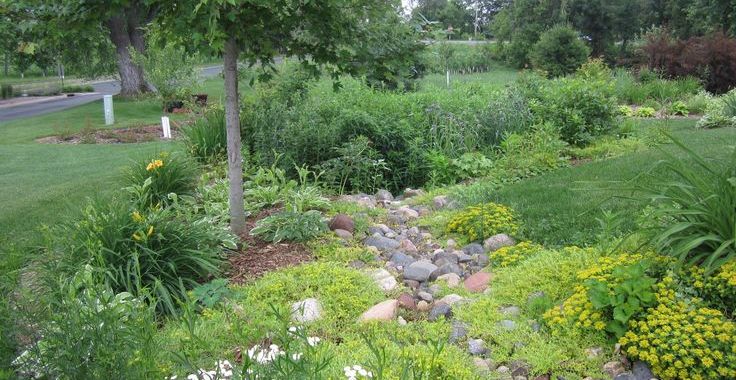
Reduce storm water runoff and keep our waters clean with the installation of green infrastructure including reducing impervious surfaces, grading all areas away from your house at a gentle slope, and capturing rainwater on site by installing rain gardens/barrels.  Your goal should be to keep as much rainwater on site as possible. 

Remove as much lawn as possible and replace it with gardens filled with native plants.  Irrigate only when necessary but do keep in mind that even native plants need supplemental water as they get established (during the first 2 years).  Be sure to mulch properly but remember that green mulch is the best mulch.   Choose the right plant for the right place, matching your planting choice with the site conditions.   

RESOURCES