We invite you to join us on Saturday, May 17th for a 2-hour workshop to learn more about the benefits of adding a rain garden to your landscape. You will enhance its beauty, all while improving drainage, and creating a wildlife habitat.
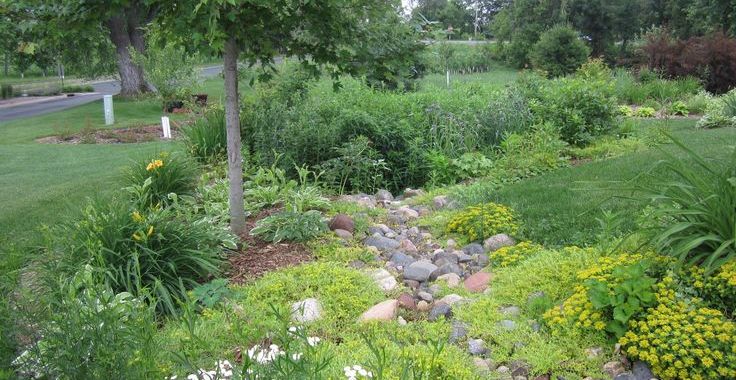
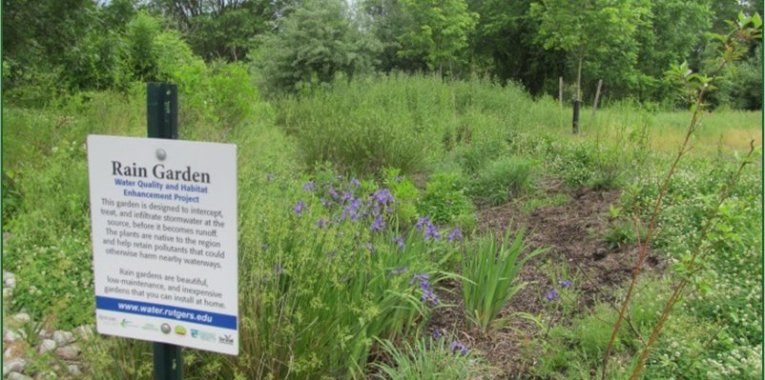
Rain gardens can help us manage storm water runoff from rooftops, driveways, lawns, roads, and other hard surfaces. They look like regular perennial gardens, but they are much more. During a storm, a rain garden fills with water, and the water slowly filters into the ground rather than running into storm sewers. By capturing storm water, rain gardens help to reduce the impact of human activities and pollution in the environment such as road sediment/salt, fertilizers, pesticides, bacteria from pet waste, eroded soil, grass clippings, litter, etc. This helps protect the health of our waterways. Rain gardens also add beauty to neighborhood and provide wildlife habitat.
In this 2-hour workshop, you can learn how to plan and plant your own rain garden, enhancing your property and your neighborhood, about the stormwater benefits of rain gardens, providing watershed-wide benefits with native plants, and go home with a plant list or draft design for your yard. Now is the perfect time to plan a rain garden for planting this spring!
Presenters: Olvia Spildooren from The Watershed Institute. Olivia is the River-Friendly Coordinator
Fill Your Landscape with Native Plants to Sustain Our Native Wildlife
April is officially Native Plant Month, and the Ewing Green Team is committed to increasing awareness of the critical role that native plants play in supporting a healthy environment and thriving wildlife populations. During this month, and every month, we encourage you to learn about the benefits to our local ecosystems gained by planting native trees, shrubs, and perennials that support bees, birds, butterflies, and all wildlife.
What could be better? Native plants are underrated beauties that, once established, weather the vicissitudes of climate change better than non-natives. They generally have deeper root systems, which can search down for water in times of drought such as we are experiencing now. They also anchor in and absorb stormwater runoff during times of excess rain, all while offering support in terms of food, cover, and shelter to our declining wildlife populations. They require fewer artificial inputs: no fertilizers, pesticides, and herbicides, no soil amendments, and limited watering. Finally, they offer a truer enjoyment of the natural world as we experience not only its beauty but also a deeper connection to nature as we observe our landscape used as habitats. We urge you to plant natives because wildlife matters and is worth protecting.
What exactly are native plants? And why are they important?
Plants are considered to be native to an area where they occurred naturally over time and developed symbiotic relationships with insects and other wildlife that have evolved with them. Since evolution is not a quick process, this means over hundreds, or even thousands, of years in a particular area or region. Only plants found in this country before European settlement are generally considered to be native to the United States. And, plants that are native to other areas of the country such as the west or northwest, California… may be native to the United States, but are not considered to native to our area in New Jersey. Some plants may have a very wide native geographic range, and others may be much more limited. When selecting plants for your garden, it is important to pay attention to their native range and to choose plants that are native to our Central Jersey area.
Did you know that New Jersey is home to over 3000 species of native plants (as defined by the New Jersey Native Plant Society), offering tremendous variety as well as diversity of habitat and sustenance to the critters that evolved alongside with them? Mercer County also has its own unique set of plants defined as native to the county.
Since New Jersey’s animals, insects, and microorganisms have evolved in conjunction with our regional gasses, ferns, wildflowers, shrubs, and trees, they have developed symbiotic relationships and depend upon each other for their survival. Our native plants will attract and feed birds, bees, butterflies, small mammals in your yard and you can feel good about sustaining the food web in the habitat they need to survive.
So, how to choose
While our NJ natives always provide sustenance for some wildlife, there are some that provide special ecosystem value for their relative biomass, supporting the greatest number of wildlife species. They are called keystone native plants and are critical to the food web, and necessary for many wildlife to complete their life cycles. Every region of the country has different native plant communities. (Here in Ewing, we are in the Eastern Temperate Forests, Ecoregion 8. )
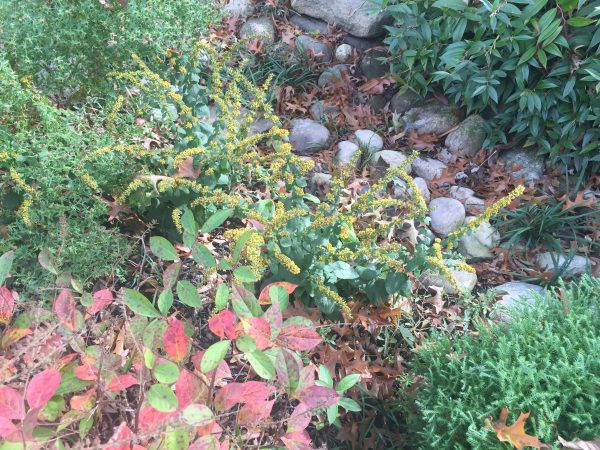
Rudbeckia and EchinaceaSolidagoAsters
If you have the room, you will get the biggest wildlife bang for your buck by planting a tree, particularly oaks. The Red oak (Quercus rubra) is NJ’s state tree and is particularly beautiful, but there are numerous oaks that are native to our state that provide great wildlife value. The Northern red oak grows up to 100 feet tall and is a good choice for a street tree because it is salt resistant. Oaks in general support over 436 species of caterpillars alone. Willows (in the shrub category) support 289 species. And then there are the flowering perennials. Top among them are the goldenrod and asters, Black-eyed Susans, and more. This author particularly loves the perennials that flower later in the season as they support butterflies and other insects as they begin their fall migrations, or prepare for the winter hibernation.
Members of the team will regale you with their favorites during the coming weeks. Through our promotion of Native Plant Month, Ewing and its citizens can engage and make a difference in our home landscapes. As invasive species overrun more and more of both our cultivated and wild spaces, native species that support local biodiversity play an increasingly important role. We ask that during Native Plant Month you start to dedicate some space, whether it be a container, your patio, or yard to make a difference and sustain our wildlife.
Our thanks to Ann Farnham of the Ewing Environmental Commission for sharing this article with us about our continued use of non-native plants in the landscape.
We continue to hammer away on the disadvantages of using non-native plants. Remember, a good definition of a native plant is one that existed in any specific region before the European settlement in this country. Ewing is in the Mid-Atlantic region and our natives are well adapted to our particular soils, precipitation, temperatures, elevations and exposures. Our native wildlife – insects, mammals, birds, reptiles – developed along with them.
Many people believe that if a plant is sold at a local nursery or garden center that it is all right to use. Unfortunately, that is not correct. Because we have no laws or ordinances that prohibit the sale of introduced or invasive plants (some states do), they are widely available. What we can do at this point is to be informed and avoid buying them.
What are some of the popular, non-native plants sold in local nurseries and garden centers?
In March, 2016 we wrote about Bradford Callery Pear, (Pyrus calleryana); In June, 2016 it was Acer platanoides, Norway Maple; in July, 2016, we wrote about Burning Bush, (Euonymus alatus); and in August, 2016, Winter Creeper, (Euonymus fortunei). Unfortunately, these are all available at local nurseries and garden centers. A few more garden center boarders – invasives and aggressors – are listed below; most, having few natural predators, form un-challenged thickets at the expense of our native plants.
Butterfly Bush (Buddleia davidii): This vigorous, nectar-producing butterfly attractor is an attractive shrub with fragrant, colored flower spikes, It self-seeds prolifically, however, and before long your planting bed will be overcome with a Buddleia thicket which crowds out everything else. It is classified as noxious weed in Oregon and Washington.
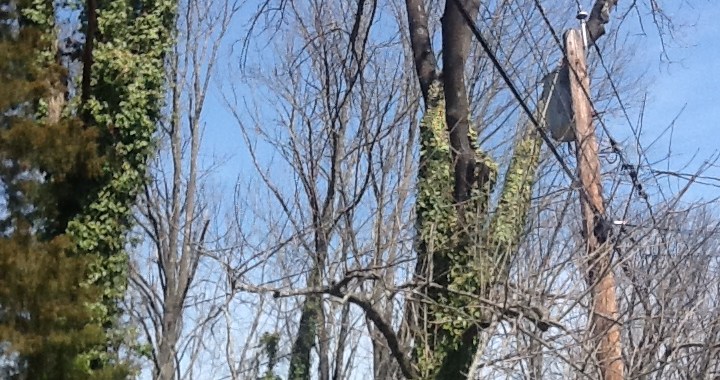
English Ivy (Hedera helix): This popular and sometimes very lovely vine easily goes astray, spreading throughout woody areas and gardens, choking out other vegetation. English ivy kills trees and shrubs by smothering them.
Heavenly Bamboo (Nandina domestica): This is not a bamboo, in spite of its popular common name. All parts of the plant are toxic, especially to Cedar Waxwings, cats and grazing animals, resulting in many deaths. Heavenly Bamboo crowds out other plants with prolific seeds and underground stems.
Japanese Barberry (Berberis thunbergii) : This shrub is banned in Wisconsin and Massachusetts. It displaces native plants with prolific, bird-dispersed seeds, and harbors ticks (due to the high humidity in its dense foliage) mice, and, as a result, lyme disease.
Japanese Spirea (Spiraea japonica): this plant harbors many insects and diseases but still outcompetes and replaces native plants. Its seeds, dispersed by birds, form dense thickets which are very tolerant to many conditions. It impedes the germination of native seeds.
Japanese Wisteria (Wisteria floribunda): This very adaptable vine shades out other plants and girdles trees and shrubs as it climbs, cutting off nutrients by choking the trunks and producing dense shade.
Maiden Grass/Chinese Silver GrassMiscanthus sinensis: More than 50 ornamental varieties of this grass are sold in the United States. The wind-dispersed, viable seed forms thickets which are very adaptable to many conditions, choking out native plants. This is a very popular ornamental grass which is popular to use in a lot of landscaping.
PeriwinkleVinca minor: ( not V. major).This groundcover forms dense, extensive mats, choking out other plants. It harbors blights and is allelopathic, meaning that its chemical compounds inhibit the growth of nearby plants.
Privet (Ligustrum sp): This popular hedge plant is toxic to pets and mildly toxic to humans. Thousands of fruits outcompete and replace natives. The seeds, dispersed by birds, form very dense thickets. Compounds in the leaves protect the plant from feeding insects, so it is “trouble free” for the hedge-growing home owner.
Go to www.MAIPC, the Mid Atlantic Invasive Plant Council for additional plant lists.
Native plant alternatives to exotics can be found in the Brooklyn Botanical Garden’s Native Alternatives to Invasive Plants. In addition, be sure to visit the web sites:
Urge your State Legislator to Support the “DOT Native Plants Bill”
The Ewing Green Team encourages you to contact your local representatives in the State Legislature to urge them to support this important native plants legislation.
If enacted, this bill will require the New Jersey Department of Transportation, the NJ Turnpike Authority (which includes the Garden State Parkway), and the South Jersey Transportation Authority to use ONLY NATIVE PLANTS for landscaping, land management, reforestation, or habitat restoration on the 2,800 miles highways they manage in New Jersey.
Please contact your state senator and assembly representative to insure that they know how important native plants and the wildlife that they support are to our environment. Passage of this legislation will help preserve water quality, provide food and habitat for NJ wildlife and preserve New Jersey’s natural beauty and local character for future generations.
This bill was written for Save Barnegat Bay by Senator Jim Holzapfel and Assemblymen David Wolfe and Greg McGuckin. Senate Minority Leader Tom Kean Jr. and Senator Kip Bateman are co-sponsors.
To Contact Your Representatives:
Ewing is in District 15, (Hunterdon and Mercer) which includes East Amwell, Ewing, Hopewell Borough (Mercer), Hopewell Township (Mercer), Lambertville, Lawrence (Mercer), Pennington, Trenton, West Amwell, and West Windsor
How to Design and Implement a Rain Garden in Your Landscape
Become Water Wise and Protect Our Native Species
If you can only do one thing for the environment this season we suggest reducing some of our vast suburban monoculture by removing some of your lawn and planting a garden. If you plant a rain garden near a downspout to intercept roof runoff and filled with native plants; even better. It will help to slow the flood of storm water, reduce erosion, and absorb pollutants. The birds, bees and butterflies will also repay your hard work by appearing regularly and pollinating your landscape. And then enjoy the fun of watching wildlife up close!
What Are Rain Gardens?
Rain gardens are plantings that are specifically designed to soak up rain water from roofs, from driveways, parking lots, and lawns. When it rains, the rain garden fills with a few inches of water and allows the water to slowly seep into ground filtering out pollutants such as fertilizer, pesticides, and oil, rather than having it run into the waterways or storm drains. This purifies the water and lets it replenish the aquifer rather than having it flow unfiltered into streams, lakes or the ocean. The ground should not remain wet, but should dry in a day or so of fair weather. It is planted with native shrubs and flowers that can tolerate wet or dry conditions and add to the beauty of the neighborhood and attract wildlife.
Rain Gardens not only beautify your landscape, but also serve practical environmental purposes. Their interception of water runoff from impervious surfaces provides a number of benefits for your landscape. It acts to minimize the volume and improve the quality of water entering conventional storm drains and nearby streams. It also works to minimize soil erosion. It helps you provide a habitat for wildlife which can be sorely lacking in home gardens. And finally, the volume and quality of water is better whether it is absorbed in or leaves a rain garden.
Lindsay Blanton, our 2013/2014 AmeriCorps Watershed Ambassador at NJDEP, will present using training materials created by Rutgers University. She will teach the basic steps to building and maintaining this simple, proven and inexpensive solution to the problem of storm water pollution.
Date: Tuesday, June 10, 2014 Time: 7 p.m. Location: Hollowbrook Community Center, Nutrition Room, 320 Hollowbrook Dr, Ewing Township, NJ 08638 Cost: Free and Open to the Public



 Sustainable Ewing Green Team