2020 International Dark-Sky Week Urges Homebound Families to “Look Up Together”

Celebrate the wonder of our night skies every night and turn out the lights! 

During International Dark Sky Week, April 19-26, the International Dark-Sky Association  (IDSA) invites you and your family to engage with dynamic authors, educators, artists, and scientists from around the world who are excited to share their passion for astronomy, our cultural connection to the stars, life in the dark, and how we can work together to protect the night.

“Right now, families around the globe find themselves spending many hours at home together,” notes Ruskin Hartley, IDA’s Executive Director. “It’s a perfect time to reconnect with the night sky — and International Dark-Sky Week provides a portal for that experience.”  For example, have you ever wondered how to find a constellation in the night sky? Or how cultures around the world, and across time, saw their place in the stars? Or what critters are exploring the night while you sleep?

IDSW’s presenters and activities will explore these questions and many more. Presentations will be broadcast live every day during International Dark Sky Week. Learn more, and check out the schedule at idsw.darksky.org, or follow along on YouTube or Facebook. Let’s #lookuptogether this #IDSW2020.

We encourage you to use your homebound time to learn more by taking advantage of a series of live presentations and videos from dark sky experts from around the world during  International Dark Skies Week!

Why Light Pollution Matters

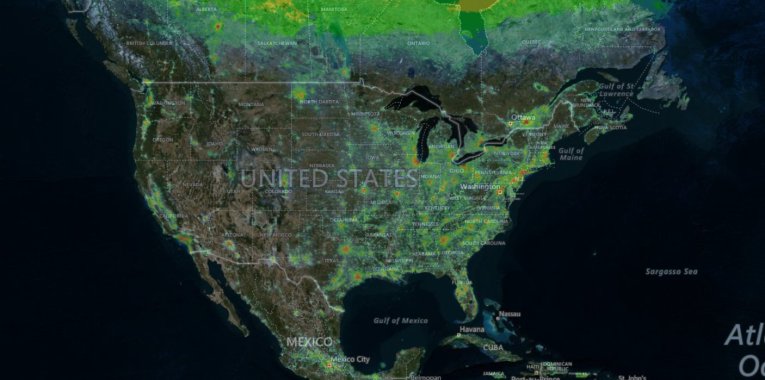
The nighttime environment is a crucial natural resource for all life on Earth, but the glow of uncontrolled outdoor lighting has hidden the stars, radically changing the nighttime environment.

Before the advent of electric light in the 20th century, our ancestors experienced a night sky brimming with stars that inspired science, religion, philosophy, art and literature.

The common heritage of a natural night sky is rapidly becoming unknown to the newest generations. In fact, millions of children across the globe will never see the Milky Way from their own homes.

We are only just beginning to understand the negative repercussions of losing this natural resource. A growing body of research suggests that the loss of the natural nighttime environment is causing serious harm to human health and the environment.

Light Pollution Threatens Wildlife

For billions of years, life has relied on Earth’s day-night rhythm to govern life-sustaining behaviors. It’s encoded in the DNA of all plants and animals. Humans have radically disrupted this cycle by lighting up the night. Research shows that artificial light at night has negative and deadly effects on many species.

Sea turtles live in the ocean but hatch on the beach at night. Hatchlings find the sea by detecting the bright horizon over the ocean. Artificial lights can draw them away from the sea, stranding them on land. In Florida alone, millions of hatchlings die this way every year. Many insects are drawn to light, but artificial lights can create a fatal attraction. Declining insect populations negatively impact all species that rely on insects for food or pollination. Nocturnal mammals sleep in the day and are active at night. Light pollution disrupts their nighttime environment.

Artificial lights also endanger many bird species. They can disrupt the migratory schedules of birds causing them to leave too early or too late in the season, missing ideal conditions for nesting. Birds that navigate by moonlight and starlight can wander off course. Millions die every year by colliding into illuminated buildings.

Light Pollution Threatens Human Health

Humans are not immune to the negative effects of light in their nighttime spaces. Excessive exposure to artificial light at night, particularly blue light, has been linked to increased risks for obesity, depression, sleep disorders, diabetes and breast cancer.

Light Pollution Wastes Energy and Money

In the U.S. alone, there are about 162 million public and commercial outdoor light fixtures including

  • 45 million streetlights,
  • 52 million parking-lot lights,
  • 62 million lights on commercial buildings.

Residential outdoor lighting isn’t as bright, but there’s a lot more of it — about 1 billion light fixtures.

Lighting consumes lots of energy. In an average year in the U.S., outdoor lighting uses some 120 terawatt-hours of energy, mostly to illuminate streets and parking lots. That’s enough energy to meet New York City’s total electricity needs for 2 years! Excessive light at night causes light pollution and unnecessary greenhouse gas emissions, contributing to climate change.

So, let’s stop wasting so much energy! With so much lighting, even modest efforts to control outdoor lighting saves money, reduces carbon emissions, and helps the environment. We do need some light at night, but much of it is wasted by lights that are overly bright or left on when not needed. Unshielded fixtures waste the most energy. Their light shines upward, instead of down on the ground where it’s needed. At least 30% of outdoor light is wasted. That adds up to $3.3 billion and the release of 21 million tons of CO2 per year! To offset all that CO2, we’d have to plant 875 million trees annually.

But Don’t We Need Nighttime Lighting for Safety & Security?

There is no clear scientific evidence that increased outdoor lighting deters crime. It may make us feel safer but it does not make us safer. The truth is bad outdoor lighting can decrease safety by making victims and property easier to see.

Glare from overly bright, unshielded lighting creates shadows in which criminals can hide. It also shines directly into our eyes, constricting our pupils. This diminishes the ability of our eyes to adapt to low-light conditions and leads to poorer nighttime vision, dangerous to motorists and pedestrians alike.

What Can Be Done?

The EGT is regularly asked: “What can I do to make a difference?” Well, here is one way that you can make a contribution and the good news is that light pollution is reversible and its solutions are immediate, simple and cost-effective. Here are a few simple things you can do to confront the problem and take back the night:

  • Check around your home. Use only fully shielded, dark sky friendly fixtures for all outdoor lighting, so lights shine down, not up, to minimize “light trespass” beyond your property lines.
  • Use only the right amount of light needed. Too much light is wasteful, harms wildlife and creates glare.
  • Install timers and dimmer switches and turn off lights when not in use. If you must have security lighting, use motion sensors.
  • Use only lighting with a color temperature of 3000K and below. This means that there is less blue (cool) light that is more harmful to many animal species.
  • Check out this resource page on outdoor lighting basics.
  • Talk to neighbors. Explain that poorly shielded fixtures waste energy, produce glare and reduce visibility. Work with your local governments to ensure outdoor lighting isn’t harming the wildlife in your area.
  • Become a Citizen Scientist with Globe at Night and document light pollution in your neighborhood and share the results. Doing so, contributes to a global database of light pollution measurements.


[Resources and background materials for this article come from The International Dark Sky Association, a 501(c)(3) non-profit organization based in Tucson, Arizona. For 25 years, it has advocated for the protection of the nighttime environment and dark night skies by educating policymakers and the public about night sky conservation and promoting environmentally responsible outdoor lighting. More information about IDA and its mission may be found at http://www.darksky.org.]

Cancellation of EGT Spring Events

Dear Friends of the Ewing Green Team,

In an effort to prevent the spread of COVID-19 (Coronavirus), please note the cancellation of the following scheduled events for this spring:

  • April 18th, Spring Stream Clean Up in cooperation with The Watershed Institute
  • April 22nd, Earth Day Celebration – A Crash Course on Honey Bees
  • April 25th, Arbor Day Celebration and Tree Give Away
  • June 6th, first date of our scheduled Three Seasons of Color Through the Garden Gate Tour.  We will keep you updated as to whether or not the other tour dates will be rescheduled.

Please keep healthy and stay tuned for rescheduled dates.

Going Green in Mercer County with Meals on Wheels

By Joanne Mullowney

Most overviews covering the current state of recycling in the United States are pretty grim.  From the lack of markets and escalating costs, to contamination, to the prevalence of materials in our everyday lives that need to be recycled;  the effort to “reduce, reuse, and recycle” the mass of potential recyclables in our trash is not one of our proudest achievements.  And, getting most of the public to recognize the extent of the crisis and make the changes needed to both their consumption (think bottled water) and recycling habits has not been overly successful.  That is why we are delighted to highlight the work of local non-profit Meals on Wheels of Mercer County (MOWMC) in making changes to their operations during 2019 that significantly reduce their non-recyclable output.  Their willingness to take the initiative in finding ways to reduce their reliance on single-use plastic bags is a success story of which they can be justly proud.

I sat down with Meals on Wheels Chief Executive Officer Sasa Olessi Montaño last week to learn more about their efforts to reduce the use of plastic in their operations.  Meals on Wheels of Mercer County is a local non-profit that provides daily, home-delivered meals to individuals who are homebound, and are unable to shop or prepare meals for themselves. These “meals-on-wheels” are delivered by volunteers five days per week and may include weekend meals. The meals are prepared at Rider University and up to two meals per day are available to participants.  This process necessitates a lot of packaging.

“In late 2019,” Olessi Montaño shared, “Meals on Wheels switched from using single-use plastic bags for meal deliveries to reusable shopping bags.  With over 250 deliveries each day, what seems like a small change will save an estimated 60,000 bags from going into landfills each year.”  In addition, MOWMC has been making changes to its operations over the past years to become more sustainable.  The organization now serves the entrees and salads in eco-friendly, compostable containers made from natural fibers.  The cold drinks such as milk and juice are served in recyclable containers.  No utensils or straws are dispensed.

There is one last piece in the meals that MOWMC staff are working to resolve.  State regulations require a programmatic safeguard of keeping the hot and cold items separated.  Cold items are currently placed in separate small white plastic bags.  Since condensation from the cold items could dissolve paper bags, greening this aspect of the operation remains to be worked out and is under discussion with the caterer.

The decision to jettison the plastic bags also involved weighing the environmental benefits with the needs of both the volunteers and the program participants.  Participants generally fall into three categories: those who are fully functional and able to carry both the hot and the cold portions of the delivery from the door to their interiors without assistance; those who use walkers when coming to the door and are thus unable to transport their meal to the kitchen without bags; and those who allow the Meals on Wheels volunteer to carry their meals indoors for them.  Volunteers were asked to identify the second type of participant throughout the delivery routes and those participants were given extra reusable bags to keep and hang on their walkers to transport their food deliveries from the door.

Most volunteers (over 90%) were very pleased that MOWMC was making a very positive environmental change and some 40% said that they had abandoned using the plastic bags for quite some time on their own.   Others are gradually coming on board with the need for the change.  The program participants also embraced the change without difficulty. CEO Olessi Montaño said that she was very pleased with the success of the adoption of the new procedures and the donation of reusable bags from Ewing ShopRite and Whole Foods in Princeton that helped make it possible, commenting that “Mercer County is a very giving community and that both businesses are great neighbors and community partners.”

We are delighted with the positive changes in their operations that Meals on Wheels has embraced.  Not only do they make a difference daily to the lives of their program participants, but they are also contributing positive environmental changes to our little section of the planet while accomplishing their mission.  A positive and heartening lesson for us all!

2020 Mercer Green Fest on March 14th at Rider University 11am-4pm

Sustainable living highlighted at the annual Mercer Green Fest

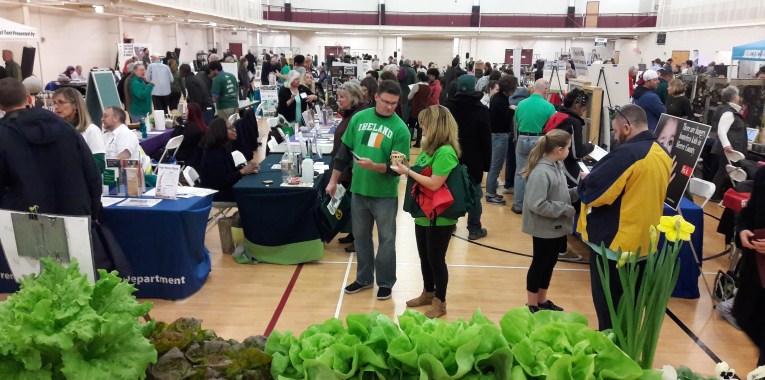
The Mercer Green Fest, in its 14th year, has now become a family tradition. Come one and all to this annual FREE, fun, entertaining, and educational festival! Rain or shine, we are expecting over 100 vendors including sustainable businesses, farmers market, non-profit organizations, school and student projects, art, energy programs, and much more.

There will be lots to do and see. Electric cars are becoming so popular and the Green Fest will feature one of the largest displays on the east coast. Speak with an expert while checking out the different kinds of makes and models available.   The Mercer Transportation Management Association (TMA) will be handing out copies of their new trail network plan just in time for your family to plan a spring bike ride.

Fun for the Kids…

The Green Fest is a family-friendly event with a fantastic live music and show line-up:

  • 11:30am-12:30pm Miss Amy’s Band
  • 12:30pm-1:00pm Tucker’s Tales Puppet Show
  • 1:00pm-2:00pm Eyes of the World Zoo
  • 2:00pm-2:30pm Tucker’s Tales Puppet Show
  • 2:30pm-3:30pm Solar Man

At least 7 schools and scout groups will be showcasing their sustainable science projects. Children can make their very own puppets. Food and snacks will be available by Terhune Orchards all day with treats such as cider, donuts, soup, chili, cookies, and apples. Plan to spend the afternoon with us!

The Mercer Green Fest is organized by the partners of the Mercer Sustainability Coalition: East Windsor Township, the Ewing Green Team, the Hopewell Valley Green TeamLawrence Environmental Resources & Sustainability Green Advisory Committee (ERSGAC), Hightstown Environmental Commission, Sustainable LawrenceSustainable Princeton, the West Windsor Environmental Commission, and the Mercer County Office of Economic Development and Sustainability.

Event Summary

Date: Saturday, March 14, 2020
Time: 11am-4pm
Location: Rider University Student Recreation Center, 2083 Lawrenceville Rd, Lawrenceville, NJ.
Cost:  Free and open to the Public

For more information on the Mercer County Green Fest visit https://mercersustainabilitycoalition.org/green_fair/.

This Photo by Unknown Author is licensed under CC BY-SA

Completing the 2020 Census Will Help to Sustain Our Community

Help shape Ewing’s (and New Jersey’s) future with your response.

This year in 2020 the U.S. government will begin its decennial count of the population.  Sometime in mid-March you should receive an invitation to complete the 2020 Census in the mail.  With your response you will continue a process that first began in 1790 and has occurred every ten years since on years ending in “0.”  The United States census is constitutionally mandated and attempts to count every person living in the U.S. once, and only once, where they live.  Your response is requested by phone, by mail or online.

It is vitally important that each Ewing resident is accounted for in the Census.

What’s at Stake

Fair Representation

The results of the census are used for the reapportionment of seats for the House of Representatives for the coming decade.  Census results will determine how many seats New Jersey is entitled to in the House and will help ensure that any redistricting of congressional districts which takes place after the census will be fair.  Officials will also redraw the boundaries of legislative districts for representation in the state Assembly.

How does the 2020 Census Affect Representation?

Funding

You’ve probably heard that (overall) New Jersey is a “donor” state which means that New Jerseyans send to Washington more funds than are returned to us in the form of federal funds, grants, and support for the state, counties and communities.  That money is spent on hospitals, schools, roads, public works, and other vital programs and includes school lunches, plans for highways, support for firefighters and families in need…   The Decennial Census provides the benchmark data for how the funds are distributed.  An accurate count is vital in guaranteeing that funds are fairly returned to New Jersey residents through these programs.

How the Census Affects Federal Funding

Data Analysis

Census data is analyzed by local government, universities, non-profits, the business community to inform their research and planning.  Governments use the census for public safety and emergency preparedness.  Businesses use the data for market research and decisions such as where to build plants, offices and stores which create jobs.  The data is used for infrastructure and transportation planning, medical research, and much more.

What You Need to Know

  • If you live in the United States, you are required by law to complete the 2020 Census.
  • In 2020, for the first time ever, the U.S. Census Bureau will accept responses online.  You still have the option of responding by phone or mail if that is your preference.
  • You will be asked a few simple questions such as name, age, date of birth, sex, race, relationships, and the number of people who live in your home, including children.  The goal is to count people once (and only once) where they live on Census Day (April 1st).
  • They will inquire about national origin (Latino, Hispanic or Spanish) to monitor compliance with anti-discrimination provisions, such as under the Voting Rights Act and the Civil Rights Act.
  • They ask whether a home is owned or rented to create statistics about home ownership and renters.  This serves as an indicator of the nation’s economy and helps in administering housing programs and informing planning decisions.
  • You will NOT be asked to supply your Social Security number, bank or credit card numbers, for money or donations, or anything related to political parties.
  • Count everyone under your roof as of April 1, 2020.  If there are special circumstances such as students, foreign citizens, US military personnel, snow birds, etc. please check the Special Circumstances section on the Census Bureau’s Who to Count page.
  • The Census Bureau will ask for a phone number in case they need to contact you.  They will never share that number and will contact you only if needed for official Census Bureau business.
  • Your answers to the 2020 Census are safe, secure and protected by federal law.  Your answers can only be used to produce statistics.  They cannot be used against you in any way by any government agency: not by the FBI, the CIA, DHS, or ICE!  By law, all responses to the U.S. Census Bureau household and business surveys are kept completely confidential.
  • The Census Bureau has a robust cyber-security program that incorporates industry best practices and federal security standards for encrypting data.

Census Timeline

  • March 12 – 20: You should receive an invitation to respond online to the census questionnaire.
  • March 16 -24: A reminder letter will be sent out.
  • March 25 – April 3: You will receive a reminder postcard if you haven’t responded yet.
  • April 1st: Census Day observed.
  • April 8 – 16: Another reminder letter and a paper questionnaire.
  • April 20 -27: A final reminder postcard before they follow up in person.
  • May – July: Census takers will begin visiting homes that haven’t responded to the 2020 Census to help make sure that everyone is counted. If someone comes to your home to collect information for the 2020 Census, check to make sure that they have a valid ID badge, with their photograph, a U.S. Department of Commerce watermark, and an expiration date. Census workers may also carry Census Bureau bags and other equipment with the Census Bureau logo.
    2020 Census Job Opportunities
  • December: The Census Bureau will deliver apportionment counts to the President and Congress as required by law.

Your response matters

We ask that over the next few months you complete your census information and help get the word out about the importance of a complete census for Ewing Township.  Look for more information and reminders to come, on our Facebook page, and posters around town as we work to ensure that every Township resident is counted.