Mercer Green Fest – Fun for the Whole Family!

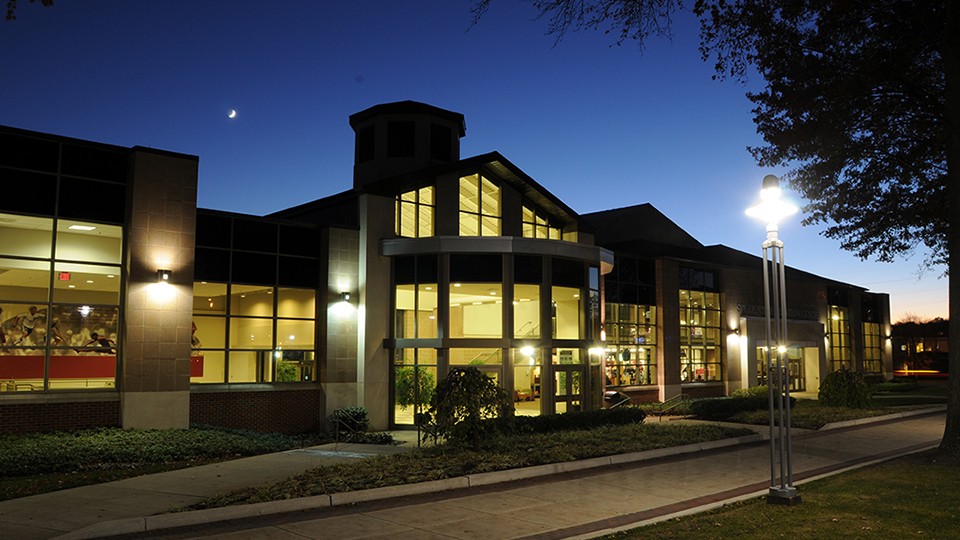
The annual Mercer Green Fest, formerly called The Living Local Expo, invites all Mercer residents to join us at the fair and have fun going green!  The festival will be at Rider University’s Student Recreation Center located on the main campus in Lawrence Township.  It is Free and Open to the Public and will run from 11 am until 4 pm.  The event will feature live entertainment, local sustainable businesses, sustainable community groups, a farmer’s market, local fresh food at our lunch café, demonstrations, and speakers throughout the day.  There will be fun for the whole family!

More than 70 eco-friendly businesses and organizations will be offering information and incentives to help you go green and save money. Visitors can learn about a wide variety of sustainability issues and exciting community projects such as bike trails, food waste recycling programs, energy efficiency, electric cars, health, exercise & wellness, and science fair projects from area schools.

schimekfamilyfitnesscenterThe Rider University Schimek Family Fitness Center will be open and some lucky visitor will get a free year membership! Learn more about the Fitness Center.

The event will feature entertainment for the whole family:

  • missamy2010_4x6Miss Amy, our local GRAMMY Nominated Artist Author/Educator, musician and Fitness Pro, will rock and roll with the kids at this year’s Festival from 11am -12 noon.
  • The Green Planet Band recycle rock n’ roll one song at a time from 12 pm – 1 pm.
  • Eyes of the Wild: Traveling Zoo will take the stage from 1 pm – 2 pm.
  • The Grand Falloons will put on their recycling and a science show  with juggling, magic, comedy, song and dance from 2 pm – 3 pm.
  • Solar Man will arrive and provide interactive fun experimenting with solar energy  between 3 pm – 4 pm.

The local farmers will have a great array of fresh fruits and vegetables as well as flowers, plants, herbs, and artisan food products for sale.

A family friendly lunch celebrating locally grown and seasonal ingredients will be available for purchase all day.

Art is an important part of a sustainable community! Everyone can have fun with our Art all Day area, designing creative art and crafts.

Time is running out, but it is not too late to secure a spot in our Green Fest through March 10 by contacting Teresita Bastides-Heron of Sustainable Lawrence at (609) 882-6367 or heron45sustainablelawrence@gmail.com or Joanne Mullowney of the Ewing Green Team at (609) 883-0862 or ewinggreenteam@gmail.com.

The Mercer Green Fest is organized by the partners of the Mercer Sustainability Coalition: the Ewing Green Team, the Hopewell Valley Green Team, Lawrence Environmental Resources & Sustainability Green Advisory Committee (ERSGAC), Sustainable Lawrence, Sustainable Princeton, the West Windsor Environmental Commission, and the Mercer County Office of Economic Development and Sustainability.


Ewing Community Gardens Update

Spring is not far off and it’s time to start making plans for the 2017 garden year. The Ewing Community Garden Association will meet Wednesday, February 15, 7:00 p.m. at the Ewing Township Senior and Community Center, 999 Lower Ferry Road.

The agenda will include:

  • Review of the Good Garden Neighbor guidelines
  • Update or re-approve garden bylaws
  • Elect Garden Council members
  • Review of the plot sign-up process for existing gardeners

Registration Details for the 2017 Gardening Season

The 2017 Registration for Garden Plots at the Ewing Community Gardens on Whitehead Road Extension Will Begin in March in the

Office of the Clerk (2nd floor)
2 Jake Garzio Drive
Ewing, NJ 08628

Plots are $5.00 each and you can purchase up to two plots.

Registration Dates

March 1, 2017 Registration will Open for Previous Year Plot Holders

March 15, 2017 Registration will Open for New Applicants

Owners of Plots in 2016 will have an opportunity to reserve their same plots from the prior year.

If there are still plots available on April 15th, 2017 you may purchase additional plot(s). Please call the clerk’s office at (609) 538-7608 to find out if more plots are available.

Requirements

You must be present to buy your plot(s).

Ewing Township residents only (proof of residency is required) No Exceptions!!!

The official opening of the gardens is weather determined and announced later in the season.


For information about the Ewing Community Gardens Association email ewingcommunitygardens@gmail.com.  Look for the upcoming ad in the March Ewing Observer.

2016 EGT Annual Report

Hot off the presses – the Ewing Green Team’s 2016 Annual Report has just been published!  2016 was a year of milestone accomplishments and recognition for Ewing Township, its Green Team and sustainability partners.  Highlights include:

  •  Sustainable Jersey SILVER certification,
  • a Sustainability Champion award for medium-sized municipalities,
  • a $20k grant for Emerald Ash Borer remediation efforts to make significant headway against a regional and national threat to one of the signature tree species of the region, and finally,
  • our Association of NJ Environmental Commissions (ANJEC) Environmental Achievement award.

These accomplishments reflect the efforts of the team to continue to build on previous years’ efforts and plans. The Ewing Green Team’s Strategic Plan, created during the 2014-2105 Community Visioning process, guided the team in completing those recommended actions for our Sustainable Jersey recertification effort in the first half of 2016. In 2013, Ewing amassed 185 points for Bronze level certification. In 2016, we completed 32 of the rigorous Sustainable Jersey program sustainability actions for a total of 460 points, for Silver level certification. Ewing’s actions are documented in Ewing’s Sustainable Jersey Profile and 2016 Silver Certification Report on Sustainable Jersey’s website.

The Ewing Green Team continues to actively participate in regional sustainability efforts thru the Mercer County Sustainability Coalition, a county-wide coalition that aims to address environmental concerns that span municipal borders.  Ewing has been a central figure in the formation and institutionalization of the organization.

None of this would have been possible without the active support of Mayor Bert Steinmann and Township Business Administrator Jim McManimon who have been key partners in helping us attain our goals. Township Council has worked to help us reach our goals throughout this and previous years and our 2016 Green Team council member Sarah Steward was an invaluable part of the Green Team’s recertification efforts. Councilwoman Jennifer Keyes-Maloney also provided aid in completing a number of difficult actions. Township Planner Chuck Latini was responsible for documenting actions worth 75 points, including hard-to-get actions such as Brownfields and Transit Oriented Development Supportive Zoning. Recreation Department Director Ted Forst also worked with us to complete a number of important projects.

We also owe great thanks to numerous other boards, committees and organizations in town with whom we partnered to complete activities including, but not limited to, the Ewing Environmental Commission, the Arts Commission, the Planning Board, the Ewing Township Historic Preservation Society, the Girl Scouts, the TCNJ Bonner Community Scholars, and the West Trenton Garden Club.  We look forward to continuing our work with our partners in the Township and regionally in the coming year and to including more individuals, businesses, and community-based organizations in our efforts and for the future.

Winter De-Icing Choices: An Eco-Dilemma

by Mark Wetherbee

Snow and ice storms have been making their way across the country with regularity this winter.  We’ve been impacted here in NJ only slightly compared to other areas of the country, but when needed, the state, county and local road crews have been out doing great jobs keeping us safe on the roads.

Sodium chloride, or rock salt, is the typical de-icing chemical used on our roads and highways. It lowers the freezing point of water, letting it remain as a liquid at colder temperatures and its large granules help provide traction for vehicles and pedestrians alike, often with the addition of sand.  However, while salt does an excellent job of de-icing and keeping us safer on our roads, the long term damage to the environment from excess road salts causes a perennial tension.  Like the practice of using too much plastic in our daily lives, this is another practice the results of which don’t just “go away.”  Salt on the roadways and sidewalks washes off into lakes and streams and seeps into groundwater supplies making a salty home for aquatic plants and wild animals and adversely affecting the quality and taste our drinking water.  Our pets too, are adversely affected by the big, jagged granules of rock salt between their paw pads.  They can irritate the area around the paw pads and cause the animals to lick the area.  The ingested salts and other contaminants can irritate their digestion or worse still, poison them.

Home Landscape Considerations

Excess salt in the landscape is toxic to plants.

  • “When the salt dissolves in water, the elements separate and the sodium the sodium ions in the salt replace the other nutrients in the soil that plants need (potassium, calcium, and magnesium), so these nutrients are unavailable to the plant.
  • Rock salt also absorbs the water that would normally be available to roots, which dehydrates the roots, changes their physiology, and causes additional plant stress. Meanwhile, roots absorb the chloride ions and transport them to the leaves, where they accumulate and interfere with chlorophyll production and photosynthesis.” [3]
  • Salt spray also damages a plant’s leaves, buds and small twigs, reducing cold hardiness and making its tissue more susceptible to freeze damage.

Protect your landscape from salt damage. The Ewing Green Team recommends you use coarse sand and/or clean clay kitty litter to provide traction on your sidewalks and driveways. If you must use salt, try to limit its use as much as possible.  You might erect fencing to protect sensitive plants and minimize their contact with the salt product.   After icy winters where a number of salt applications were necessary, irrigation of the soil prior to spring green up to leach out the sodium and chloride has also been shown to be effective.

Alternatives

There are a number of alternatives to sodium chloride for both residential and government usage that have cropped up due to environmental concerns. These include increased use of sand, calcium magnesium acetate, calcium chloride, magnesium chloride, cheese and pickle brine (Bergen County in NJ has experimented with pickle brine), beet or corn solution,  potassium acetate, and an idea for the future – solar roads.[1] Calcium Chloride is the alternative that is most readily available to homeowners at your local hardware store or home improvement store and our comparison follows.

Sodium Chloride (Rock Salt) vs. Calcium Chloride

Rock Salt is the number 1 enemy of concrete. While effective at melting snow and ice at temperatures as low as 20 °F, during colder weather it allows melt-off to refreeze. This leads to a long series of alternating freezing and thawing, which will erode your concrete driveway and sidewalk surface.  Additionally, rock salt has the highest quantity of chloride ions in it of any deicer, and these ions can dissolve in water and pollute local lakes and rivers and cause potential harm to vegetation and animals.  It is also very corrosive and harms certain metals such as rebar in your concrete structures and the underbody of vehicles.  A vehicle that has spent time on salted roadways should have the underbody washed frequently to reduce the corrosion of the steel structure.

Calcium Chloride is effective to as low as -20 deg. F. It is noncorrosive and will not harm concrete or other surfaces.  It is more expensive than rock salt as a product, but in the long run of its use does not cause the need for the repairs that the damage that Rock Salt causes and, if used as directed, will not harm vegetation.[2] It also works much faster and pound for pound it melts twice as much ice.[3]

Summary

Anyone who has been through an ice-storm will justifiably applaud the de-icing benefits that rock salt provides for our road crews and around our homes. However, its long term environmental impacts call for inclusion of more environmentally friendly and unfortunately, more expensive options.  We hope that a combination of these options will make us safer in both the short and the long term.

[1] http://www.mnn.com/earth-matters/translating-uncle-sam/stories/de-icing-dilemma-do-streets-need-salt

[2] http://www.peterschemical.com/calcium-chloride-vs-rock-salt-which-do-you-use/ Peters Chemical Company.

[3] https://www.extension.purdue.edu/extmedia/id/id-412-w.pdf, “Salt Damage in Landscape Plants,” Janna Beckerman and B. Rosier Lerner, Purdue University Extension publication HO-142-W Table 1. De-icing Alternatives