Kick the Habit: A Dirty Dozen of Common Gardening Bad Habits You Need to Kick

From the EGT’s Sustainable Landscaping Series, “The Ecological Benefits of the Not So Perfect Yard”

Bad Habit #10 – Tilling

  • Don’t till seasonally.  If the condition of the soil bed requires it, till once at the beginning of the bed set up and then let it do its thing naturally.
  • Tilling brings up weed seeds that are buried in the soil and setting them free to germinate and do their worst.
  • Tilling destroys soil structure and small microorganisms that are a part of the living soil structure.  This means they are unable to produce nitrogen that benefits your plants.
  • Tilling can create a thick, dense layer of compacted soil known as hardpan.  Hardpan can restrict the flow of nutrients and water through the soil. 
  • Tilling releases carbon into the atmosphere that you should keep in your soil.

Kick the Habit Cover your soil with layers of mulch. Wood chips in particular, placed ON TOP OF THE SOIL, are an invaluable resource.  They are generally available for free and are used by organic gardeners to mulch their gardens. The chips eventually break down and feed the soil increasing its fertility, water retention, and the beneficial organisms in the food web.  Green mulch (plants) is even better.

Kick the Habit: A Dirty Dozen of Common Gardening Bad Habits You Need to Kick

From the EGT’s Sustainable Landscaping Series, “The Ecological Benefits of the Not So Perfect Yard”

Bad Habit #9 – Not Being Waterwise

As our drought across great swaths of our country last summer makes clear, water conservation efforts are critical.  We frequently go from one extreme to another: either too much or not enough.   Acres of water guzzling lawn, non-native plant species, inappropriate watering habits, all contribute to water scarcity issues.  Excessive impervious cover contributes to stormwater runoff which leads to water pollution and undercharged groundwater tables.
KICK THE HABIT

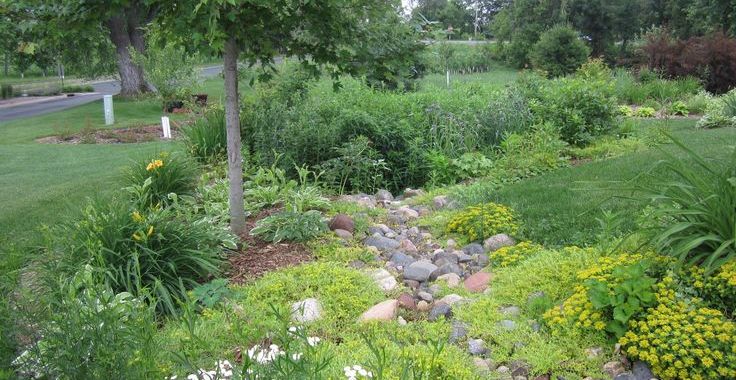
Reduce storm water runoff and keep our waters clean with the installation of green infrastructure including reducing impervious surfaces, grading all areas away from your house at a gentle slope, and capturing rainwater on site by installing rain gardens/barrels.  Your goal should be to keep as much rainwater on site as possible. 

Remove as much lawn as possible and replace it with gardens filled with native plants.  Irrigate only when necessary but do keep in mind that even native plants need supplemental water as they get established (during the first 2 years).  Be sure to mulch properly but remember that green mulch is the best mulch.   Choose the right plant for the right place, matching your planting choice with the site conditions.   

RESOURCES

Calling All Bicycle Enthusiasts!  Ewing Green Team To Host 9th Annual Fall Spin Bike Tour As A Part Of Ewing Community Fest

Mayor Bert Steinmann, the Ewing Green Team, and the Ewing Recreation Department are pleased to announce that Ewing’s annual Fall Spin bike tour will be held on Saturday, September 30, 2023, starting at 8:15am.

We invite you to join your fellow Ewingites and pedal your way through town on a 12-mile leisurely ride with a guided Police escort, and enjoy a morning of exercise, fun and camaraderie.  There will be rest stops with refreshments and free bike inspections, provided by Hart’s Cyclery, will be available.

The event, now in its 9th year, has been a hit with area residents who enjoy taking a leisurely tour of the town with their friends and family members. It’s also a great opportunity to meet fellow residents from across Ewing.

This event kicks off Ewing’s annual Community Fest Celebration at TCNJ, starting and ending at Campus Town. 

Each year the proceeds are donated to a different charity.  The selected charity for 2023 is Meals on Wheels of Mercer County, a local nonprofit dedicated to providing nutritious meals and related services, while easing the social isolation of our senior and homebound participants.  The goal of the services is to assist participants, who wish to remain in their homes, maintain independence, dignity, health, and well-being.

The Ewing Fall Spin is open to individuals or teams, ages 18 years and older.  You are encouraged to register early as there is a maximum number of 60 riders allowed. “We would love participants to sign up as individuals or come as a team of friends, family members or co-workers,” says EGT Member and Bike Tour Chairperson, Garry Keel. The Fall Spin registration fee is $25 prior to September 23rd and $30 thereafter. All persons registering by September 23rd will receive a T-shirt. Day-of-event registration will begin at 7:45am.

Ride Details

Date: September 30th (Rain or shine). In case of really inclement weather and the event has to be cancelled, we will try to contact you by phone and/or email. (So please fill out the form with your computer or sign up using CommunityPass)
Meet Up: 7:45 a.m. at Campus Town
Ride Start: 8:15 a.m.
Cost: $25 per person (includes a free tee shirt if your registration is received by September 17th.) $30 per person if received after Sept 23rd.
Police Escort: The Ewing police will once again escort us through intersections.

Registration

  • Online: You must create a user account (a one-time requirement for all Ewing programs) and fill out all required information.  This will populate our registration form and waiver.  There is an additional $3 fee to cover processing costs.  Do not use this system if you are being comped for the ride.
  • In Person: Register and pay at the ESCC Recreation Department Office, temporarily located at the Hollowbrook Community Center, 320 Hollowbrook Drive, Ewing, NJ 08638.
  • Phone in registration by Credit Card Call 609-883-1776 Ext. 2
  • By mail Fill out the registration form and mail it along with your check made out to the Ewing Twp. Recreation Department to:

Ted Forst (Director)
Ewing Recreation Department
Hollowbrook Community Center
320 Hollowbrook Drive
Ewing, NJ 08638

More Things Biking at Community Fest!

Bike Rodeo

Kids ages 4 -12 are invited to the 2023 Community Fest Bike Rodeo.  Aimed at teaching the rules of the road, as well as some safety tips for both the rider and their cycle, the event is still in the planning stages but will be held in conjunction with Community Fest, Saturday, September 30th at the parking lot near the Food Trucks.  More information to come.

Recycle Your Bicycle! 

Help put a smile on the face of a child when you donate your used bicycle to help kids from low-income families enjoy the freedom and delight of biking! Drop off your used bicycle at the Bike Rodeo.  This Bike Drive is being held in collaboration with the Boys and Girls Club Bike Exchange located at Capitol Plaza. 

Kick the Habit: A Dirty Dozen of Common Gardening Bad Habits You Need to Kick

From the EGT’s Sustainable Landscaping Series, “The Ecological Benefits of the Not So Perfect Yard”

Bad Habit #8 – Chemical Fertilizers, Herbicides, Pesticides

When you spray pesticides or add inorganic fertilizer to your beds, you kill the microorganisms in the soil. You might give your plants a temporary boost or “save” them from insect infestations but having killed your soil biology, you will need to keep adding chemical inputs. All those chemical inputs are then carried by storm waters into our waterways, poisoning the animal life, the drinking water, and lead to conditions that increase the sterility of the soil.  Research also shows that amending the planting hole with compost or topsoil is not necessarily beneficial.  Most plants, particularly natives, do better when planted in native, unamended soil.  It seems that the amendments encourage roots to stay in the vicinity of their planting holes and not grow out into the un-amended soil, leading to stunted root systems. 

Look Out for Neonicotinoids

Neonics, or neonicotinoids, are a class of pesticide widely used by growers which are a leading cause of bee and pollinator die-offs. They are a synthetic insecticide which affect the central nervous system of insects leading to “difficulty in navigating, learning, and foraging, suppressed immune response, lower sperm viability, shortened lifespans of queens, and reduced numbers of new queens produced.1

They are, unfortunately, widely used on agricultural crops, lawns, ornamentals and other home garden plants. Seeds that you purchase may also be coated with them and seedlings may also be treated with them. They are absorbed throughout the entire plant from the roots to the flowers, even the pollen and the seeds. Everything that feeds on a treated plant would be affected, so it has a devastating effect on insect populations, birds, and subsequently, the whole ecosystem.

Being so widely used, you need to beware of plant purchases from big box stores and chain garden centers. Their stock most likely has been treated with them. Make it a best practice to inquire if they are selling uncontaminated seeds or plants. Buy only USDA Certified Organic plants or buy from a native plant nursery.

KICK THE HABIT Let the roots grow in the native soil and use organic matter on the surface as a mulch. Don’t use dyed mulch.

When you spray pesticides or add inorganic fertilizer to your beds, you kill the microorganisms in the soil.

  1. https://en.wikipedia.org/wiki/Neonicotinoid

Kick the Habit: A Dirty Dozen of Common Gardening Bad Habits You Need to Kick

From the EGT’s Sustainable Landscaping Series, “The Ecological Benefits of the Not So Perfect Yard”

Bad Habit #7 Weeding

This is not intuitive but, “DON’T pull weeds AND… Don’t dig them out.“ So, why not and how should you handle weeds? 

Why not? Pulling disturbs the soil, uproots buried weed seeds, and encourages them to flourish.  It also disturbs the roots of plants that are nearby (how many of you have pulled out a weed and brought a desired plant with it?) and breaks down the desirably crumbly texture of the soil.  Mulch may help with weed suppression but doesn’t work as a stand-alone answer.

Kick the Habit Chop weeds off at the soil surface without disturbing the soil.  For tiny sprouts you may lightly use your hoe to chop them back.  (Remember, don’t compost weed seed heads.)