Plant a Tree in Ewing for America’s 250th Birthday

It’s not too early to get started!

In celebration of the United States’ 250th birthday, the Ewing Green Team and Environmental Commission have joined forces with the Mayor and Council, local businesses, and residents, to promote an audacious and worthy goal – planting 250 new trees in Ewing!

Our ask: Give America the best birthday gift ever. Plant a tree!

250 Trees for America's 250th!

We can’t do it alone. We need your help! To help us achieve our shared dream of a more beautiful, healthy, and environmentally friendly Ewing, we ask that you take a simple but important step: Plant one tree!

There are many reasons to plant a tree: trees purify the air, mitigate the effects of climate change, and prevent stormwater runoff while increasing the value of your property and beautifying your neighborhood for generations to come. In fact, studies have even shown that trees enhance your mental and physical health.

DID YOU KNOW that Ewing’s tree canopy cover is low compared to the average statewide in New Jersey? (27.4% vs. 40%)

OUR GOAL: to inspire 250+ Ewing residents, businesses, and organizations to plant or pledge to plant at least 250 trees in town. This can be on your own property or by donating to plant a tree in one of Ewing’s parks and public lands.

It will soon be peak Fall planting time and we encourage you to let us know of your tree planting plans by taking ourPLEDGE TO PLANTa tree in your yard for our 250 Tree Initiative! We urge you to join with us and make your new tree one of the official 250 Trees for America’s 250th! Just click the link to fill out our quick, simple form and become a part of our movement to plant 250 trees in Ewing.

Sign the pledgeand then let us know when you have planted your tree(s).  We will provide the encouragement and the know-how: from choosing your tree, planting it, and taking care of it. 

We need your help! Help us meet our goal of planting at least 250 trees before the end of 2026.   Ewing businesses: look for ways that you can participate in our 250 Trees for America’s 250th Campaign coming soon.  For more information email us at ewinggreenteam@gmail.com.

Additional Resources

Check out Ewing Township’s Caring for Your Trees webpage at ewingnj.org/caring-for-your-trees for detailed information. The page covers a wide variety of tree topics including regular maintenance, pruning (say no to tree topping), mulching tips (no volcanoes!), choosing your tree, and much more.

Plant These First
Plant These First

It’s April! Celebrate Native Plant Month

Fill Your Landscape with Native Plants to Sustain Our Native Wildlife

April is officially Native Plant Month, and the Ewing Green Team is committed to increasing awareness of the critical role that native plants play in supporting a healthy environment and thriving wildlife populations. During this month, and every month, we encourage you to learn about the benefits to our local ecosystems gained by planting native trees, shrubs, and perennials that support bees, birds, butterflies, and all wildlife.

What could be better?  Native plants are underrated beauties that, once established, weather the vicissitudes of climate change better than non-natives.  They generally have deeper root systems, which can search down for water in times of drought such as we are experiencing now.  They also anchor in and absorb stormwater runoff during times of excess rain, all while offering support in terms of food, cover, and shelter to our declining wildlife populations.  They require fewer artificial inputs:  no fertilizers, pesticides, and herbicides, no soil amendments, and limited watering.  Finally, they offer a truer enjoyment of the natural world as we experience not only its beauty but also a deeper connection to nature as we observe our landscape used as habitats.  We urge you to plant natives because wildlife matters and is worth protecting.

What exactly are native plants? And why are they important?

Plants are considered to be native to an area where they occurred naturally over time and developed symbiotic relationships with insects and other wildlife that have evolved with them.  Since evolution is not a quick process, this means over hundreds, or even thousands, of years in a particular area or region.  Only plants found in this country before European settlement are generally considered to be native to the United States.  And, plants that are native to other areas of the country such as the west or northwest, California… may be native to the United States, but are not considered to native to our area in New Jersey.  Some plants may have a very wide native geographic range, and others may be much more limited.  When selecting plants for your garden, it is important to pay attention to their native range and to choose plants that are native to our Central Jersey area.

Did you know that New Jersey is home to over 3000 species of native plants (as defined by the New Jersey Native Plant Society), offering tremendous variety as well as diversity of habitat and sustenance to the critters that evolved alongside with them?  Mercer County also has its own unique set of plants defined as native to the county.

Since New Jersey’s animals, insects, and microorganisms have evolved in conjunction with our regional gasses, ferns, wildflowers, shrubs, and trees, they have developed symbiotic relationships and depend upon each other for their survival.  Our native plants will attract and feed birds, bees, butterflies, small mammals in your yard and you can feel good about sustaining the food web in the habitat they need to survive. 

So, how to choose

While our NJ natives always provide sustenance for some wildlife, there are some that provide special ecosystem value for their relative biomass, supporting the greatest number of wildlife species.  They are called keystone native plants and are critical to the food web, and necessary for many wildlife to complete their life cycles.    Every region of the country has different native plant communities.  (Here in Ewing, we are in the Eastern Temperate Forests, Ecoregion 8. )  

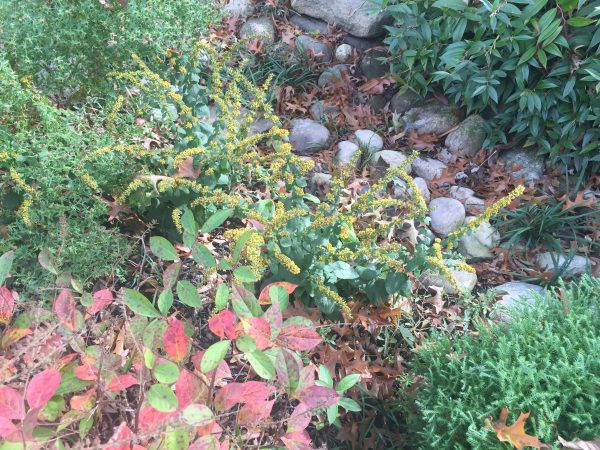
If you have the room, you will get the biggest wildlife bang for your buck by planting a tree, particularly oaks.  The Red oak (Quercus rubra) is NJ’s state tree and is particularly beautiful, but there are numerous oaks that are native to our state that provide great wildlife value.  The Northern red oak grows up to 100 feet tall and is a good choice for a street tree because it is salt resistant.   Oaks in general support over 436 species of caterpillars alone.  Willows (in the shrub category) support 289 species.  And then there are the flowering perennials.  Top among them are the goldenrod and asters, Black-eyed Susans, and more.  This author particularly loves the perennials that flower later in the season as they support butterflies and other insects as they begin their fall migrations, or prepare for the winter hibernation. 

Members of the team will regale you with their favorites during the coming weeks.  Through our promotion of Native Plant Month, Ewing and its citizens can engage and make a difference in our home landscapes.  As invasive species overrun more and more of both our cultivated and wild spaces, native species that support local biodiversity play an increasingly important role.  We ask that during Native Plant Month you start to dedicate some space, whether it be a container, your patio, or yard to make a difference and sustain our wildlife.

Protect Our Local Watershed at Our Annual Stream Cleanup in Ewing

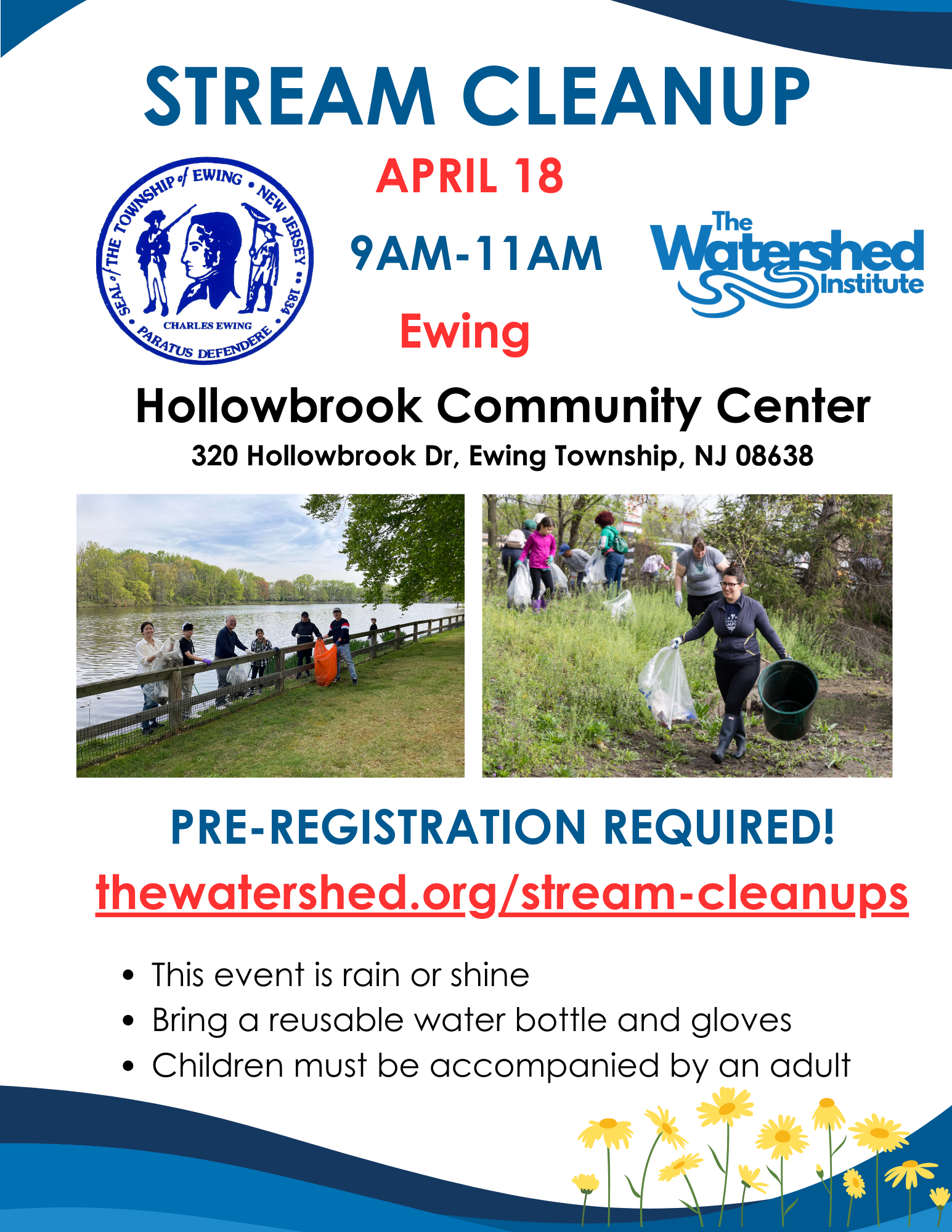
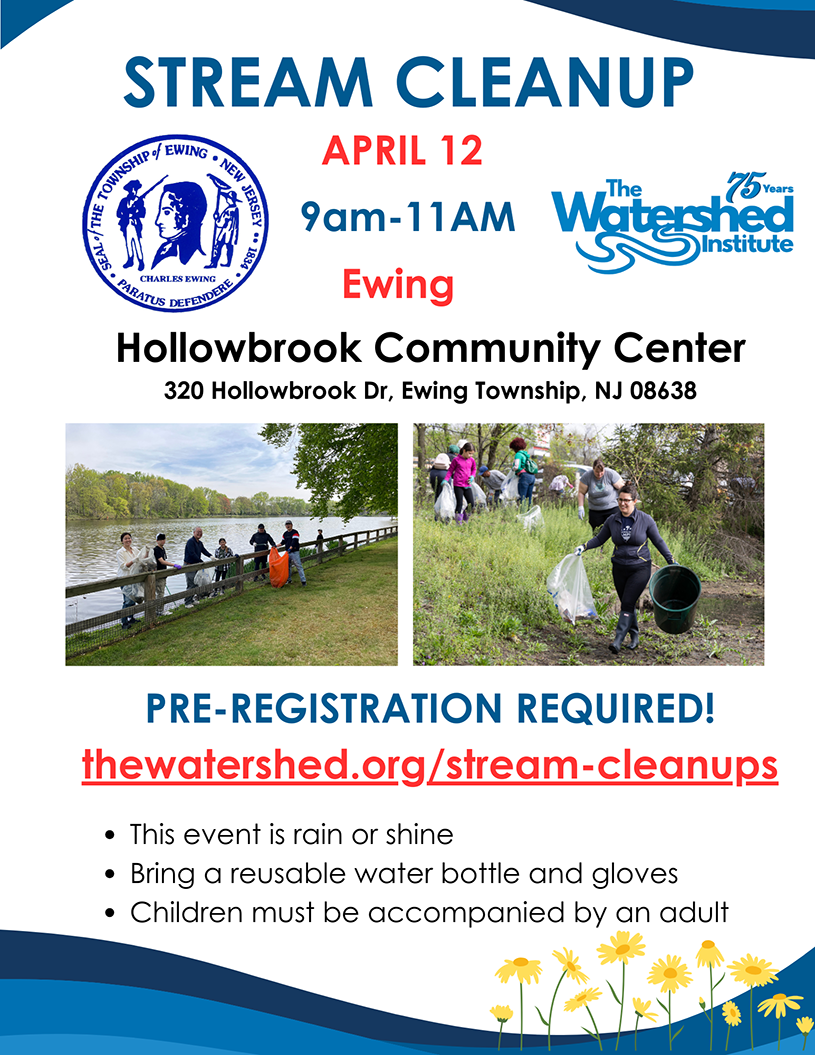
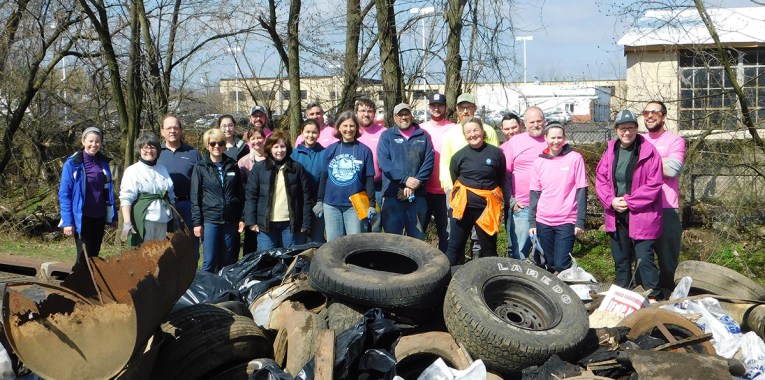
Calling all our Ewing Friends and Neighbors: Let’s work together to show the Shabakunk Creek some much needed TLC on Saturday, April 12th 9-11 am. Pre-registration required. 

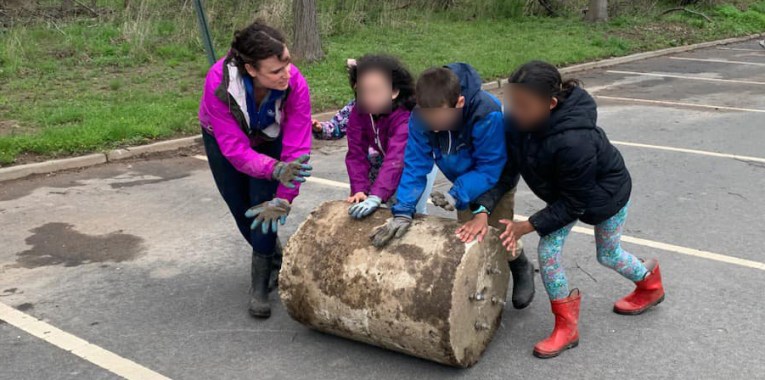
Cleanup days are a good time for Ewing residents to get out into the environment and experience nature while working to protect our important natural resources. Volunteers walk along specific stream segments and pick up trash and litter.  This event, run by Mayor Bert Steinman and the Ewing Green Team in partnership with The Watershed Institute has been run in a number of Ewing locations over the years resulting in the removal of over 9200 pounds of trash during this event alone.

Additionally, over the past decade, The Watershed Institute’s annual cleanups have coordinated the hard work of over 9,300 enthusiastic volunteers who have removed more than 160,000 pounds of trash from our local area communities.

The Ewing event this year will concentrate cleanup efforts at the Shabakunk Creek at the Hollowbrook Community Center and its environs, at 320 Hollowbrook Drive, Ewing.

Pre-registration is required! 

This is a rain or shine event.  Long pants, gloves, and closed-toed shoes are highly recommended.  Please don’t forget to bring the gloves and your reusable water bottle!  This is an in-person program. Masks are optional. A parent or legal guardian is required to attend with all children. To attend this event, you must agree to the terms of the waiver included during registration.

Thank You Giveaways!

Trees NOT Tees! The Watershed will continue to offer cleanup volunteers a complimentary tree sapling to say thank you for helping keep our waterways clean! They will not be offering stream cleanup t-shirts as we typically do to reduce our environmental impact and conserve limited natural resources. One cotton t-shirt takes 650 gallons of water to produce while a single oak tree can host 532 species of caterpillars, 147 species of birds, 120 species of mammals, and 60 species of reptiles and amphibians. In addition, one mature white oak can absorb over 2000 gallons stormwater per year which can reduce stormwater runoff pollution, flooding, and recharge groundwater.   

Sponsors

The following generous sponsors make these cleanups possible. PSE&G, Colgate-Palmolive, American Rivers, and New Jersey Clean Communities have provided funding, volunteers, and supplies.  

Event Summary

Event: Stream Cleanupat the West Branch of the Shabakunk Creek.
Date: Saturday, April 12th
Time: 9 – 11 am
Location: Hollowbrook Community Center, 320 Hollowbrook Drive, Ewing.
Cost: a couple of hours of your time
Pre-registration required: Click Here