VANISHING HABITAT REQUIRES SUSTAINABLE LANDSCAPING
Ewing’s Green Team and Environmental Commission have created our Sustainable Landscaping Series for Ewing homeowners who want to learn more about what they can do to live more sustainably and more harmoniously with nature. We believe that habitat loss and degradation is one of the greatest threats to the natural world and that we protect our own future by protecting habitats.
It has been reported that more than half the world’s wildlife has vanished since 1970 and that the “current massive degradation of habitat and extinction of many of the Earth’s biota is unprecedented and is taking place on a catastrophically short timescale.” Without wildlife there is no healthy functioning of the ecosystem services upon which we depend. Are we destroying our planet’s ability to support our way of life?
Our suburban neighborhoods have exchanged healthy native habitats for vast stretches of manicured lawns which contribute little ecological value. This is simply not sustainable. Small changes in your landscape management practices as outlined in this series of pamphlets will enable you to contribute in the much needed efforts to support wildlife. This will also add beauty and value to your homes and neighborhoods and allow you to spend more time enjoying nature in your own backyard.
Wildlife Habitat Canada states, “Without habitat, there is no wildlife. It’s that simple.” And without wildlife, there is no healthy functioning of the ecosystem services essential to ensuring our own futures.
COMPOST
Spring’s the perfect time to start composting if you haven’t already. You can set up a bin, dump it in a pile, go formal (and faster) with a compost tumbler, or go simple and just dig a hole or trench in an out of the way part of the yard and throw in your ingredients. Compostables include kitchen waste, yard recyclables, and a host of other household recyclables such as cardboard, shredded paper, non-glossy junk mail, sawdust, and more. This practices is eminently sustainable as it both reduces waste that otherwise would be sent to a landfill and recycles nutrients. Just don’t add your yard waste too early and kill off overwintering insects. Give them a chance to come back to life first and leave.
GO CHEMICAL FREE!
Pesticides kill off the insects that are an integral part of the food web for wildlife. They can pose health risks to families and pets, and can contaminate water supplies. Learn to look at holes in your leaves, not as imperfections in an unsustainable goal, but rather as a way of providing life sustaining support for the myriad creatures in Mother Nature’s food web.
Synthetic fertilizers provide short terms improvements to the growth of plants and increased yields of fruits and vegetables, but in the long term they contribute to pollution, migrating into ground water, rivers, lakes, and oceans. Many areas now have dangerously elevated levels of nitrogen in their drinking water and ponds and lakes are covered by green scum which discourages aquatic animals.
GRASSCYCLE
Leave your grass clippings on your lawn. They return nutrients to the soil and mean less work for you while reducing additions to landfills. Other recommendations include mowing to no less than 2.5″ high to protect the roots, limiting watering (in the morning) to when rainfall has been less than one inch per week, using organic fertilizers and to set the mower at “chop”or “mulch” to make clippings more easily integrated into the lawn. See the Ewing DPW sustainable lawn care pamphlet at https://ewingnj.org/documents-list/department-documents/public-works/101-faqs-about-grasscycling/file
GROW YOUR OWN FOOD
Feeding one’s family is extremely sustainable, especially if you employ organic practices. When you grow your own fruit, vegetables, and herbs, you know they’re free of harmful pesticides. Fresh picked food is also more flavorful and less expensive than food shipped across the country. Plant intensively and by season. Don’t forget companion planting and grow a little extra for the critters.
INVASIVE SPECIES
Invasive species are non-native organisms, introduced to an area outside of their natural range. Because they have fewer natural predators, they grow densely and suppress natives over large areas. Thus they interrupt the natural functions of the local ecosystem, taking up large amounts of space that would otherwise be occupied by a diversity of native species. This competition leads to negative impacts on native
plants and animals. In the US they are defined as plants that were introduced following the European settlement in America.
Many of the plants that are popular and available at local nurseries can easily become invasive. We recommend that you do your homework before purchasing new plants for your garden. Check out our Invasive Plants Commercially Available in New Jersey pamphlet for a listing of our dirty dozen of invasive plants with recommendations for substitutions. The Native Plant Society of New Jersey publishes an excellent list of plants considered invasive in NJ.
LAWNS
If you can only do one thing for the environment this season we suggest removing some of your lawn and planting a garden. Your lawn provides little to no environmental advantages for local wildlife, all the while requiring considerable time, water, chemicals, and energy to maintain. Watering your lawn contributes to water runoff, and much of the fertilizers and pesticides added to keep it green go along with it.
So please remove some excess lawn and plant a garden this spring. If you plant it with native plants, even better. If you plant vegetables that you will harvest and eat, again better! The birds, bees and butterflies will repay your hard work by appearing regularly and pollinating your landscape. And then enjoy the fun of watching wildlife up close!
MULCH
Mulching is a time-honored practice used to prevent loss of moisture, control weeds, and improve the appearance of the garden. The practice calls for placing a layer of organic materials over the root zone of a plant to benefit the roots and the soil. Materials may include wood chips, bark, pine needles, straw, leaves, grass clippings, or compost. This will eventually break down, in the process adding organic matter to the soil and enriching it.
We do not recommend mulching with inorganic materials such as rocks/pebbles, landscape fabric, or even shredded rubber tires because they do not decompose. You can also plant your garden densely for a pleasing and lush landscape, leave the resulting plant litter in place, and receive free mulch, free fertilizers, free nutrients, and free weed control.
PLANT PERENNIALS
Purchase perennials rather than annuals for value. They can be long-lived and divided every several years. Be sure to buy native perennials that are native to our area. Buying small will save $$$ and since they come back every year, they are an excellent investment.
SOIL BUILDING TIPS
- Don’t till. Tilling destroys the micro-organisms in the soil and the microbial life in the soil web. It also brings weed seeds buried in the soil to the surface where they can germinate
- Get a soil test at our local extension service before adding any amendments.
- Add compost to improve the soil and build up organic matter so that it holds nutrients instead of letting them leach away.
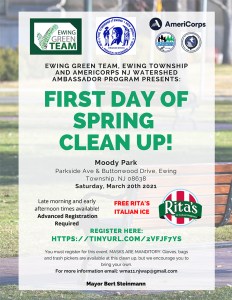
SPRING CLEANUP
Delay spring cleanup of dried flower stalks and ornamental grasses until after several 50 degree days when spring has really arrived, allowing overwintering pollinators to move on first. Use the branches that dropped from your trees over the winter to build a brush pile for wildlife.
TREES
Plant a tree or two or three. (Plant small trees in odd number arrangements for greatest aesthetic value.) Environmental benefits include removal of carbon dioxide from the air, as well as contributors to smog components such as sulfur dioxide and nitrogen oxides. Trees also provide habitat for birds and mammals and serve as host plants for many insects essential in the food web. They yield a cooling effect in the summer when they shade your home and can serve as windbreaks. Finally, they provide enjoyment with their obvious beauty and increase the real estate value of your home. Go to treebenefits.com/calculator.
We recommend planting native trees. For a list of native varieties go to the Native Plant Society of New Jersey.
WATER
Choosing the right plant for the right place will help you to use water wisely. Native plants are best adapted to our local area. Employ xeriscaping practices and keep plants with the same water needs together. If you do have to water, use sustainable water practices such as drip irrigation and watering early in the morning to reduce evaporation. Install a rain garden and rain barrel(s) to capture storm water. This not only improves water quality and directs water back into the soil where it can be used by plants, but reduces storm water runoff; prevents flooding, erosion, and water pollution and replenishes ground water.
 Sustainable Ewing Green Team