Kick the Habit: A Dirty Dozen of Common Gardening Bad Habits You Need to Kick

From the EGT’s Sustainable Landscaping Series, “The Ecological Benefits of the Not So Perfect Yard”

Bad Habit #6 Not Gardening for Wildlife

The bad habits described in this series have all contributed to an unimaginable loss of wildlife on a global scale.  It has been reported that more than half the world’s wildlife has vanished since 1970, and this is taking place on a catastrophically short timescale.  Our vast stretches of manicured lawns and plantings of alien plants in the landscape have deprived us of healthy native habitats and the wildlife on which we depend for necessary ecosystem services.

Kick the Habit Changes in your landscape management practices are needed to enable you to contribute in the much-needed efforts to support wildlife.  Gardening for Wildlife specifics as posed by the National Wildlife Federation include: (1) plant native plants (particularly keystone species identified by Dr. Doug Tallamy), (2) food (seeds, berries, nectar), (2) water (some kind of reliable water source), (3) cover (shelter from weather and predators), (4) a place to raise their young, and (5) sustainable gardening practices. 

What is meant by native exactly?

Plants are considered to be native to an area where they occurred naturally over time and developed symbiotic relationships with insects and other wildlife that have evolved with them.  This means over hundreds, or even thousands, of years in a particular area or region.  Only plants found in this country before European settlement are considered to be native to the United States.  And plants that are native to other areas of the country such as the west or northwest, California,… may be native to the United States, but are not considered to native to our area in New Jersey.  Some plants may have a very wide native geographic range and others may be much more limited.  When selecting plants for your garden, it is important to pay attention to their native range and to choose plants that are native to our Central Jersey area.

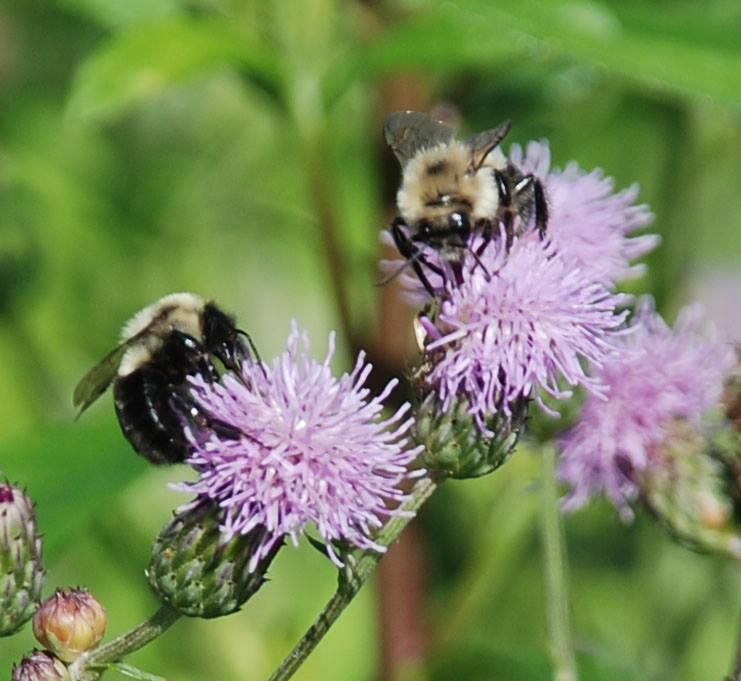
Photo by Mary Corrigan

Since New Jersey’s animals, insects, and microorganisms have evolved in conjunction with our regional gasses, ferns, wildflowers, shrubs, and trees and developed symbiotic relationships, they depend upon each other for their survival.  From the work of Professor Doug Tallamy  (author of Bringing Nature Home and others), we have learned that an overwhelming percentage of insects are specialists, not generalists.  This means that like the monarch butterfly, they are dependent on one particular plant species for sustenance during their larval stage and will not survive without it (for monarchs it is milkweed).  Native plants will attract and feed birds, bees, butterflies, small mammals in your yard and you can feel good about sustaining the food web in the habitat they need to survive.

What are Keystone Species? 

Some native plants support a more limited number of wildlife, while others are essential supporters of the life cycles of many species. These are known as keystone species. They work to hold an ecosystem together. The loss of a keystone organism can result in the dramatic change or destruction of the ecosystem, while a focus on planting of keystone species will support a greater number of wildlife species.

Dr. Doug Tallamy’s research has shown that 14% of native plants (the keystones) support 90% of butterfly and moth lepidoptera species. This suggests that we will reap greater ecosystem benefits if we make sure to always include keystone species in our landscapes.

Keystone Tree species of the Eastern Temperate Forests: oaks (premier species), American plum, maple, birch, pine…

Keystone Shrubs: Blueberries and willows

Keystone Herbaceous perennials: goldenrod, asters, sunflower, black-eyed susans…

Keystone animals: beavers, apex predators such as wolves, mountain lions, and bears,

Listing of Keystone Plants by Ecoregion.

In summary, gardening for wildlife requires planting a variety of native plants (particularly keystone species) that will help you to provide the food (seeds, berries, nectar), cover (shelter from weather and predators), and a place for wildlife to raise their young. Supplement that with some kind of reliable water source and incorporate sustainable gardening practices and you will have contributed in the much-needed efforts to support wildlife. That this will also add beauty and value to your home and neighborhoods is a bonus that will allow you to spend your time enjoying nature in your own backyard.

raking autumn leaves

Kick the Habit: A Dirty Dozen of Common Gardening Bad Habits You Need to Kick

From the EGT’s Sustainable Landscaping Series, “The Ecological Benefits of the Not So Perfect Yard”

Bad Habit #5 – Autumn Garden Clean Up

Fall garden cleanup is a ritual that gardeners have been encouraged to abandon for “a not so perfect yard” that provides food and habitat for wildlife over the winter. Raking up and disposing of our leaves, chopping down dead flower stalks and grasses all contribute to our preferred manicured appearance.  However, in nature, trees don’t drop their bounty at the curb for pick up, but rather they blanket the earth while providing a host of ecological benefits.

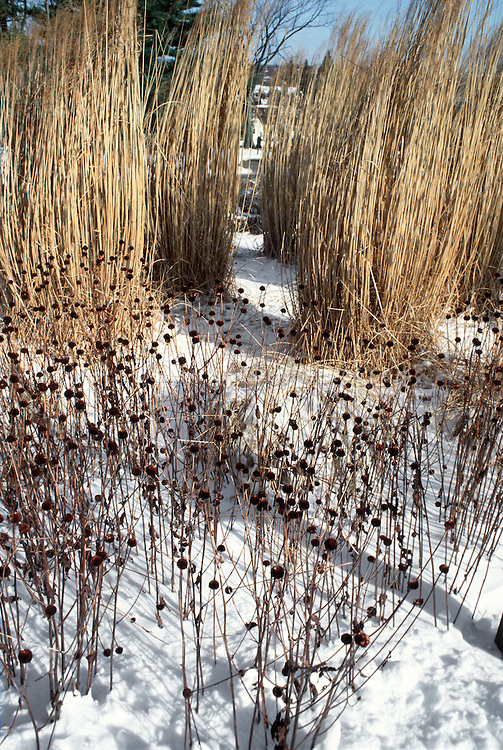
Seedheads of Rudbeckia with tall brown ornamental grass in winter snow, blue sky, browns, beiges, white to attract birds

Kick the Habit Leave the leaves! They provide an insulating winter cover in the garden and break down and replenish the soil.   Allow dried flower heads to stay standing in your garden.  They look gorgeous against the snow, and nothing is more exciting than seeing our small, winged friends feasting upon the seed heads.  Let your ornamental grasses grow tall and go to seed.  They provide shelter for the insects that pollinate our gardens and feed fledgling birds and other wildlife. They also look fabulous swaying in the wind during the fall and winter months.  Save your cleanup for spring, after overwintering insects have woken up and moved on. 

Kick the Habit: A Dirty Dozen of Common Gardening Bad Habits You Need to Kick

Bad Habit #4: Lawns

Lawns are not native. They do not provide food or habitat for wildlife. They take up huge swaths of the country (over 40 million areas). They require the application of ecologically harmful chemicals to maintain a pristine expanse of weed-free turf, as well as regular watering. They also require weekly cutting with gas guzzling and pollution emitting equipment. Many homeowners still bag the grass clippings, depriving lawns of valuable nutrients and adding to the solid waste stream.


KICK THE HABIT We recommend that you remove some of your lawn to provide wildlife habitat and leave your clippings on the lawn.  For more information about grasscycling see Ewing’s Department of Public Works brochure on the topic webpage (and brochure) on this topic.

Weigh In EWING! Should Ewing Continue the Annual Scarecrow Scavenger Hunt? 

Organizers of Ewing’s Annual Scarecrow Scavenger Hunt (the Ewing Green Team, Arts Commission, and Art Has No Boundaries) want to hear from YOU about Ewing’s Scarecrow Scavenger Hunt!

Why are we asking? Because without YOU it doesn’t it doesn’t make sense to continue.  

  • PharCrow

A little about the event – during the month of October residents have an opportunity to scour the community, based on clues, looking for Scarecrows in plain sight.  Ewing residents and businesses participate in the event by creating and hosting Scarecrows in and around the town.  

The challenge – planning the Scavenger Hunt takes a significant amount of time and energy, as well as lots of fundraising volunteer hours.  Sadly, last year’s event had fewer scarecrow hosts and hunters than in previous years.  We wonder why?

We have cash prizes, challenging (and fun!) clues to figure out, and it’s free!  

So, we are hoping that hearing from YOU will help us decide whether to continue this annual event!

The Scarecrow Scavenger Event was created to give our residents a fun, shared experience; to encourage a sense of community, to get people out and about in our town; and to promote name recognition for our local participating businesses.   And during the pandemic, folks were really engaged with the ‘hunt’ as we affectionally call it.   Since that time, we’ve seen a drop off in the number of participants in the contest so we are wondering why?

We’re asking for feedback from the people like YOU who live and work in Ewing, the people who are eligible to ‘host’ and/or ‘hunt.’ 

Should we go for year 5, or scrap the Scavenger Hunt and come up with another activity for our community? 

Simply answer our short survey at https://forms.gle/BbmevC3NkjWo7NFS7 .

Questions or an idea – please send an email to the Green Team at  ewinggreenteam@gmail.com

Kick the Habit: A Dirty Dozen of Common Gardening Bad Habits You Need to Kick

From the EGT’s Sustainable Landscaping Series, “The Ecological Benefits of the Not So Perfect Yard”

Bad Habit #3: Planting Non-native Plants

Plants that have been introduced to an area from other regions of the county, other countries, or even continents are known as exotic, or alien, because they are not native to that area.   While many gardeners don’t give the origin of the plants that they purchase much thought, their source is actually quite important.  This is because native plants co-evolved with insects that they can support which is critical for maintaining the food web.  Non-natives do not, so they do not feed the butterflies, moths and bees, and other wildlife the way natives will. 

Also, native plants have adapted for the local environment. Non-native plants have not.  Thus, they require additional inputs, such as fertilizer, water, …  to make a good showing.  This can lead to excess fertilizer runoff and water pollution, expensive and wasteful irrigation, and other costs.  This makes them worse for the local environments.

Some have also become invasive because they do not have the insects, disease, predators, and other natural controls in their new home that would prevent them from becoming invasive in their natural habitat.

KICK THE HABIT Plant natives (TO YOUR SPECIFIC AREA) to support the local food web, that are adapted to the local environment and require fewer inputs.

To learn more about plants that are local to our area check the New Jersey Native Plant Society website for their list of plants page. The page contains lists from the USDA Plants Database which is the most comprehensive and up-to-date source for native plant information. It also contains lists of native trees and vascular plants by county. Another useful tool is the lists of natives for various garden conditions or purposes such as deep shade, dry shade, wet sites, deer resistant… And finally, don’t forget to check out their lists of invasive plants.