Kick the Habit: A Dirty Dozen of Common Gardening Bad Habits You Need to Kick

From the EGT’s Sustainable Landscaping Series, “The Ecological Benefits of the Not So Perfect Yard”

Bad Habit #3: Planting Non-native Plants

Plants that have been introduced to an area from other regions of the county, other countries, or even continents are known as exotic, or alien, because they are not native to that area.   While many gardeners don’t give the origin of the plants that they purchase much thought, their source is actually quite important.  This is because native plants co-evolved with insects that they can support which is critical for maintaining the food web.  Non-natives do not, so they do not feed the butterflies, moths and bees, and other wildlife the way natives will. 

Also, native plants have adapted for the local environment. Non-native plants have not.  Thus, they require additional inputs, such as fertilizer, water, …  to make a good showing.  This can lead to excess fertilizer runoff and water pollution, expensive and wasteful irrigation, and other costs.  This makes them worse for the local environments.

Some have also become invasive because they do not have the insects, disease, predators, and other natural controls in their new home that would prevent them from becoming invasive in their natural habitat.

KICK THE HABIT Plant natives (TO YOUR SPECIFIC AREA) to support the local food web, that are adapted to the local environment and require fewer inputs.

To learn more about plants that are local to our area check the New Jersey Native Plant Society website for their list of plants page. The page contains lists from the USDA Plants Database which is the most comprehensive and up-to-date source for native plant information. It also contains lists of native trees and vascular plants by county. Another useful tool is the lists of natives for various garden conditions or purposes such as deep shade, dry shade, wet sites, deer resistant… And finally, don’t forget to check out their lists of invasive plants.
Kick the Habit: A Dirty Dozen of Common Gardening Bad Habits You Need to Kick

Bad Habit #2

Not Leaving Your Leaves

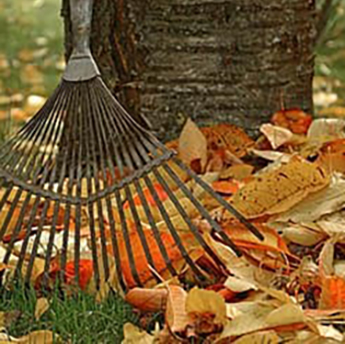
Leaves are a valuable resource that are let go to waste every fall.  When blown into piles on the street they create a safety hazard for drivers, and wash into storm drains and clog storm sewers. They also release nutrients that eventually wash into and pollute our rivers. Ewing is taking a leadership role in ensuring that we are compliant with NJ State storm water rules. As per Ewing Ordinance 21-08, leaves and other yard debris must be either bagged in biodegradable paper bags or containered for pickup by the Township.

KICK THE HABIT Leave the leaves. Blow them to the back of your beds to decompose or leave them alone in the wooded areas of your proper¬ ty. Compost them in a pile or container for use as mulch next year. Option 2 Shred your leaves with a mulching mower and leave them in place on your lawn or use as mulch in your borders and flowerbeds.

Kick the Habit: A Dirty Dozen of Common Gardening Bad Habits You Need to Kick

From the EGT’s Sustainable Landscaping Series, “The Ecological Benefits of the Not So Perfect Yard”

The Ewing Green Team advocates for using more sustainable methods of landscape care to create what we call “The Not So Perfect Yard.” That may sound somewhat messy, and you wonder if also perhaps irritating to the neighbors. It might suggest an untended look consisting of tall weeds and overgrown lawns, as well as unsightly piles of yard waste. NOT SO. That is not the “Not So Perfect Yard” for which we advocate. However, it is also not the large, open, treeless expanses of lawn and imported, exotic plants that are prevalent across the country.

A “Not So Perfect Yard ” has its own unique beauty that comes from planting native plants and incorporating features that imbue each yard with a sense of place suited to its specific site and region of the country.  It also attracts some of the native local fauna which have otherwise been displaced. Supply food and habitat for the insects at the bottom of the food web and you can enjoy birds and other wildlife returning to your own yard.

Your Not So Perfect Yard will offer much needed benefits to the local environment: helping you decrease your carbon footprint, save energy and money, reduce waste and labor, promote biodiversity, all while beautifying your landscape and affording you a much closer interaction with nature. And you can achieve these benefits by kicking the habit: dropping some of these common gardening habits that we have come to learn are not our best choices.  These include poor tree care, improper autumn cleanup and leaf management, the great American lawn, practices detrimental to soil health, and more.  Look for detailed overviews of these common gardening mistakes in the coming posts.

First Common Gardening Bad Habit

Poor Tree Care

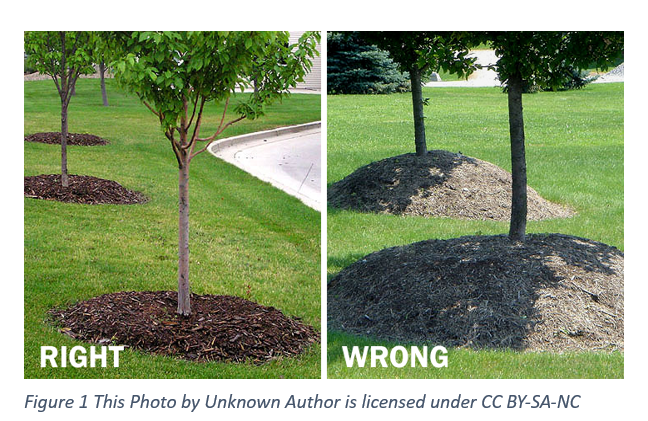
Trees are one of the greatest gifts that we can give to future generations. Our native trees are the most valuable of keystone species for our native wildlife. They cool the earth, provide shade, absorb thousands of gallons of storm water and CO2, and beautify, and add value to the landscape. Unfortunately, improper tree care is rampant in our neighborhoods, e.g., mulch volcanoes, improper staking, tree topping and other poor pruning decisions, and not planting beneath the tree to the drip line…


KICK THE HABIT Plant a tree and learn to care for it properly. Forgo the mulch volcano and mulch carefully out to the drip line, not piling it up around the trunk. Use leaf litter for natural mulch, one that decomposes over time and builds the soil. Plant in layers under your tree from the understory tree layer, to shrubs, herbaceous perennials and finally, ground covers.  This “green mulch” of living plants mimics the way trees live in nature. Hire tree PROFESSIONALS, certified arborists, to prune your tree properly. 

Mercer County Master Gardeners to hold Annual Plant Expo and Garden Market May 6th

Rutgers Master Gardeners of Mercer County’s  annual Spring Plant Expo and Garden Market, one of the most celebrated events of the year, will be Saturday, May 6 from 9 a.m. to 2 p.m. at the Mercer Educational Gardens, 431A Federal City Road, Hopewell Township, on the grounds of Mercer County Stables. The event is held rain or shine! Parking is on site and free.

There will be home-grown perennials, trees, and shrubs from the gardens of Rutgers Master Gardeners and a garden market with select vendors. This year’s vendors are Steven Kristoph Nursery, Millstone Township; Shannon’s Nursery, Doylestown, Pa.; Byrne Farm Market, Wrightstown; and Chickadee Creek Farm, Pennington. Additionally, the Master Gardeners are excited to announce the addition of a new vendor, Moon Shot Farm of East Windsor.