Kick the Habit: A Dirty Dozen of Common Gardening Bad Habits You Need to Kick

Bad Habit #11

Landscape Fabric  

It’s a myth that landscape fabric prevents weeds.  Yes, they may initially, however, the fabric, once down, tends to stay in place season after season and that’s where trouble starts.  Issues include:

Weed seeds blow on top and germinate in the mulch layer sinking their roots down thru the fabric making it/them hard to remove. 

The roots of desired plants grow across and on top of the barrier.  Thus, they are not as deep in the soil as they should be.  The lack of deeply penetrating roots make the plant easily toppled by high winds and very susceptible to drought.  We want to encourage, not discourage, deep root growth. 

Landscape fabric prevents plants from spreading and naturalizing in your bed.  Worse, weed barriers are also sometimes impregnated with herbicides and fertilizers.

A major drawback of the practice is that it inhibits soil building.  When mulch is applied over the fabric it can’t decompose and contribute to building the health of the soil beneath it.  Many of the old weed fabrics aren’t water and gas permeable leaving the soil beneath dry and compacted.  This starves plants for water and nutrients and results in greatly reduced soil food web activity, noticeable by a lack of insect activity and earthworms.   When used on areas that hold on to excess water and become soggy, the weed barrier can trap water beneath it, creating a swampy mess, and a perfect breeding ground for some noxious weeds (e.g. field horsetail). 

A final observation is that many are plastic films, and you know what we think of plastic!!  They eventually break down and you find bits of plastic everywhere.  Landscape fabric is really hard to remove once it starts breaking down and depositing microplastics in the soil.  The long-term implications of the excess of microplastics in our ecosystems are yet to be fully defined, but we suspect that they are not good. 

Kick the Habit There is no magic solution that will eliminate weeds.  Apply mulch, more mulch, and more mulch still.  Wood chips, leaves, other organic materials such as pine straw and compost all will do a better job while eventually breaking down and building your soil.  Even stones and pea gravel are better.  Layer your mulch 2-3″ thick and very few weeds will get through.  Better yet, use a living mulch of native ground covers to outcompete the weeds and reduce the need to add brown mulch each season.  In summary, landscape fabric offers a short-term gain in return for a long-term problem.

Kick the Habit: A Dirty Dozen of Common Gardening Bad Habits You Need to Kick

From the EGT’s Sustainable Landscaping Series, “The Ecological Benefits of the Not So Perfect Yard”

Bad Habit #10 – Tilling

  • Don’t till seasonally.  If the condition of the soil bed requires it, till once at the beginning of the bed set up and then let it do its thing naturally.
  • Tilling brings up weed seeds that are buried in the soil and setting them free to germinate and do their worst.
  • Tilling destroys soil structure and small microorganisms that are a part of the living soil structure.  This means they are unable to produce nitrogen that benefits your plants.
  • Tilling can create a thick, dense layer of compacted soil known as hardpan.  Hardpan can restrict the flow of nutrients and water through the soil. 
  • Tilling releases carbon into the atmosphere that you should keep in your soil.

Kick the Habit Cover your soil with layers of mulch. Wood chips in particular, placed ON TOP OF THE SOIL, are an invaluable resource.  They are generally available for free and are used by organic gardeners to mulch their gardens. The chips eventually break down and feed the soil increasing its fertility, water retention, and the beneficial organisms in the food web.  Green mulch (plants) is even better.

Kick the Habit: A Dirty Dozen of Common Gardening Bad Habits You Need to Kick

From the EGT’s Sustainable Landscaping Series, “The Ecological Benefits of the Not So Perfect Yard”

Bad Habit #9 – Not Being Waterwise

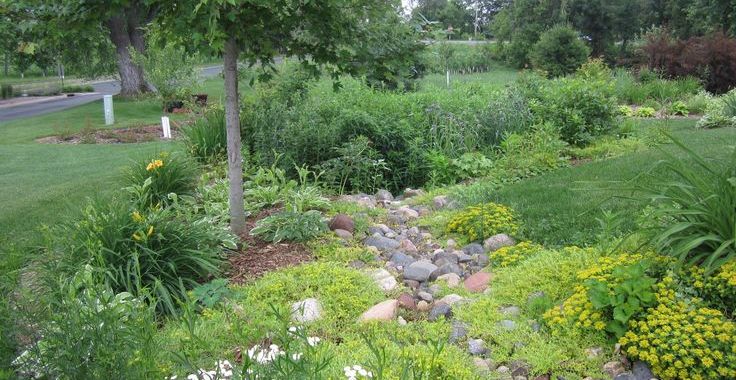
As our drought across great swaths of our country last summer makes clear, water conservation efforts are critical.  We frequently go from one extreme to another: either too much or not enough.   Acres of water guzzling lawn, non-native plant species, inappropriate watering habits, all contribute to water scarcity issues.  Excessive impervious cover contributes to stormwater runoff which leads to water pollution and undercharged groundwater tables.
KICK THE HABIT

Reduce storm water runoff and keep our waters clean with the installation of green infrastructure including reducing impervious surfaces, grading all areas away from your house at a gentle slope, and capturing rainwater on site by installing rain gardens/barrels.  Your goal should be to keep as much rainwater on site as possible. 

Remove as much lawn as possible and replace it with gardens filled with native plants.  Irrigate only when necessary but do keep in mind that even native plants need supplemental water as they get established (during the first 2 years).  Be sure to mulch properly but remember that green mulch is the best mulch.   Choose the right plant for the right place, matching your planting choice with the site conditions.   

RESOURCES

Kick the Habit: A Dirty Dozen of Common Gardening Bad Habits You Need to Kick

Bad Habit #2

Not Leaving Your Leaves

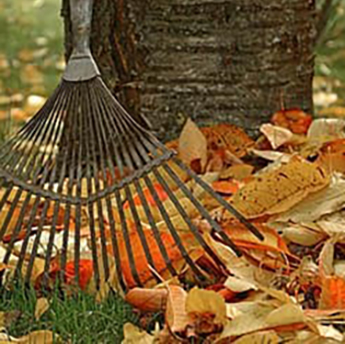
Leaves are a valuable resource that are let go to waste every fall.  When blown into piles on the street they create a safety hazard for drivers, and wash into storm drains and clog storm sewers. They also release nutrients that eventually wash into and pollute our rivers. Ewing is taking a leadership role in ensuring that we are compliant with NJ State storm water rules. As per Ewing Ordinance 21-08, leaves and other yard debris must be either bagged in biodegradable paper bags or containered for pickup by the Township.

KICK THE HABIT Leave the leaves. Blow them to the back of your beds to decompose or leave them alone in the wooded areas of your proper¬ ty. Compost them in a pile or container for use as mulch next year. Option 2 Shred your leaves with a mulching mower and leave them in place on your lawn or use as mulch in your borders and flowerbeds.

Kick the Habit: A Dirty Dozen of Common Gardening Bad Habits You Need to Kick

From the EGT’s Sustainable Landscaping Series, “The Ecological Benefits of the Not So Perfect Yard”

The Ewing Green Team advocates for using more sustainable methods of landscape care to create what we call “The Not So Perfect Yard.” That may sound somewhat messy, and you wonder if also perhaps irritating to the neighbors. It might suggest an untended look consisting of tall weeds and overgrown lawns, as well as unsightly piles of yard waste. NOT SO. That is not the “Not So Perfect Yard” for which we advocate. However, it is also not the large, open, treeless expanses of lawn and imported, exotic plants that are prevalent across the country.

A “Not So Perfect Yard ” has its own unique beauty that comes from planting native plants and incorporating features that imbue each yard with a sense of place suited to its specific site and region of the country.  It also attracts some of the native local fauna which have otherwise been displaced. Supply food and habitat for the insects at the bottom of the food web and you can enjoy birds and other wildlife returning to your own yard.

Your Not So Perfect Yard will offer much needed benefits to the local environment: helping you decrease your carbon footprint, save energy and money, reduce waste and labor, promote biodiversity, all while beautifying your landscape and affording you a much closer interaction with nature. And you can achieve these benefits by kicking the habit: dropping some of these common gardening habits that we have come to learn are not our best choices.  These include poor tree care, improper autumn cleanup and leaf management, the great American lawn, practices detrimental to soil health, and more.  Look for detailed overviews of these common gardening mistakes in the coming posts.

First Common Gardening Bad Habit

Poor Tree Care

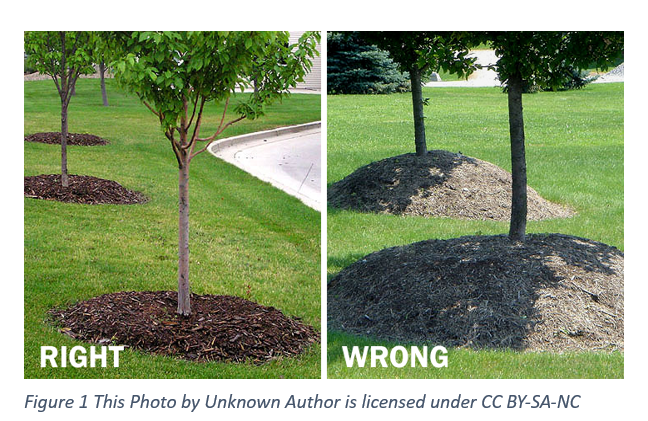
Trees are one of the greatest gifts that we can give to future generations. Our native trees are the most valuable of keystone species for our native wildlife. They cool the earth, provide shade, absorb thousands of gallons of storm water and CO2, and beautify, and add value to the landscape. Unfortunately, improper tree care is rampant in our neighborhoods, e.g., mulch volcanoes, improper staking, tree topping and other poor pruning decisions, and not planting beneath the tree to the drip line…


KICK THE HABIT Plant a tree and learn to care for it properly. Forgo the mulch volcano and mulch carefully out to the drip line, not piling it up around the trunk. Use leaf litter for natural mulch, one that decomposes over time and builds the soil. Plant in layers under your tree from the understory tree layer, to shrubs, herbaceous perennials and finally, ground covers.  This “green mulch” of living plants mimics the way trees live in nature. Hire tree PROFESSIONALS, certified arborists, to prune your tree properly.