Kick the Habit: A Dirty Dozen of Common Gardening Bad Habits You Need to Kick

Bad Habit #11

Landscape Fabric  

It’s a myth that landscape fabric prevents weeds.  Yes, they may initially, however, the fabric, once down, tends to stay in place season after season and that’s where trouble starts.  Issues include:

Weed seeds blow on top and germinate in the mulch layer sinking their roots down thru the fabric making it/them hard to remove. 

The roots of desired plants grow across and on top of the barrier.  Thus, they are not as deep in the soil as they should be.  The lack of deeply penetrating roots make the plant easily toppled by high winds and very susceptible to drought.  We want to encourage, not discourage, deep root growth. 

Landscape fabric prevents plants from spreading and naturalizing in your bed.  Worse, weed barriers are also sometimes impregnated with herbicides and fertilizers.

A major drawback of the practice is that it inhibits soil building.  When mulch is applied over the fabric it can’t decompose and contribute to building the health of the soil beneath it.  Many of the old weed fabrics aren’t water and gas permeable leaving the soil beneath dry and compacted.  This starves plants for water and nutrients and results in greatly reduced soil food web activity, noticeable by a lack of insect activity and earthworms.   When used on areas that hold on to excess water and become soggy, the weed barrier can trap water beneath it, creating a swampy mess, and a perfect breeding ground for some noxious weeds (e.g. field horsetail). 

A final observation is that many are plastic films, and you know what we think of plastic!!  They eventually break down and you find bits of plastic everywhere.  Landscape fabric is really hard to remove once it starts breaking down and depositing microplastics in the soil.  The long-term implications of the excess of microplastics in our ecosystems are yet to be fully defined, but we suspect that they are not good. 

Kick the Habit There is no magic solution that will eliminate weeds.  Apply mulch, more mulch, and more mulch still.  Wood chips, leaves, other organic materials such as pine straw and compost all will do a better job while eventually breaking down and building your soil.  Even stones and pea gravel are better.  Layer your mulch 2-3″ thick and very few weeds will get through.  Better yet, use a living mulch of native ground covers to outcompete the weeds and reduce the need to add brown mulch each season.  In summary, landscape fabric offers a short-term gain in return for a long-term problem.

Kick the Habit: A Dirty Dozen of Common Gardening Bad Habits You Need to Kick

From the EGT’s Sustainable Landscaping Series, “The Ecological Benefits of the Not So Perfect Yard”

Bad Habit #10 – Tilling

  • Don’t till seasonally.  If the condition of the soil bed requires it, till once at the beginning of the bed set up and then let it do its thing naturally.
  • Tilling brings up weed seeds that are buried in the soil and setting them free to germinate and do their worst.
  • Tilling destroys soil structure and small microorganisms that are a part of the living soil structure.  This means they are unable to produce nitrogen that benefits your plants.
  • Tilling can create a thick, dense layer of compacted soil known as hardpan.  Hardpan can restrict the flow of nutrients and water through the soil. 
  • Tilling releases carbon into the atmosphere that you should keep in your soil.

Kick the Habit Cover your soil with layers of mulch. Wood chips in particular, placed ON TOP OF THE SOIL, are an invaluable resource.  They are generally available for free and are used by organic gardeners to mulch their gardens. The chips eventually break down and feed the soil increasing its fertility, water retention, and the beneficial organisms in the food web.  Green mulch (plants) is even better.

Kick the Habit: A Dirty Dozen of Common Gardening Bad Habits You Need to Kick

From the EGT’s Sustainable Landscaping Series, “The Ecological Benefits of the Not So Perfect Yard”

Bad Habit #9 – Not Being Waterwise

As our drought across great swaths of our country last summer makes clear, water conservation efforts are critical.  We frequently go from one extreme to another: either too much or not enough.   Acres of water guzzling lawn, non-native plant species, inappropriate watering habits, all contribute to water scarcity issues.  Excessive impervious cover contributes to stormwater runoff which leads to water pollution and undercharged groundwater tables.
KICK THE HABIT

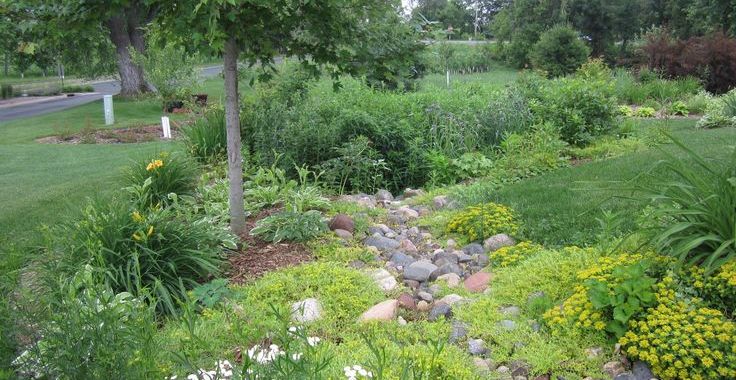
Reduce storm water runoff and keep our waters clean with the installation of green infrastructure including reducing impervious surfaces, grading all areas away from your house at a gentle slope, and capturing rainwater on site by installing rain gardens/barrels.  Your goal should be to keep as much rainwater on site as possible. 

Remove as much lawn as possible and replace it with gardens filled with native plants.  Irrigate only when necessary but do keep in mind that even native plants need supplemental water as they get established (during the first 2 years).  Be sure to mulch properly but remember that green mulch is the best mulch.   Choose the right plant for the right place, matching your planting choice with the site conditions.   

RESOURCES

Kick the Habit: A Dirty Dozen of Common Gardening Bad Habits You Need to Kick

Bad Habit #4: Lawns

Lawns are not native. They do not provide food or habitat for wildlife. They take up huge swaths of the country (over 40 million areas). They require the application of ecologically harmful chemicals to maintain a pristine expanse of weed-free turf, as well as regular watering. They also require weekly cutting with gas guzzling and pollution emitting equipment. Many homeowners still bag the grass clippings, depriving lawns of valuable nutrients and adding to the solid waste stream.


KICK THE HABIT We recommend that you remove some of your lawn to provide wildlife habitat and leave your clippings on the lawn.  For more information about grasscycling see Ewing’s Department of Public Works brochure on the topic webpage (and brochure) on this topic.

Kick the Habit: A Dirty Dozen of Common Gardening Bad Habits You Need to Kick

From the EGT’s Sustainable Landscaping Series, “The Ecological Benefits of the Not So Perfect Yard”

Bad Habit #3: Planting Non-native Plants

Plants that have been introduced to an area from other regions of the county, other countries, or even continents are known as exotic, or alien, because they are not native to that area.   While many gardeners don’t give the origin of the plants that they purchase much thought, their source is actually quite important.  This is because native plants co-evolved with insects that they can support which is critical for maintaining the food web.  Non-natives do not, so they do not feed the butterflies, moths and bees, and other wildlife the way natives will. 

Also, native plants have adapted for the local environment. Non-native plants have not.  Thus, they require additional inputs, such as fertilizer, water, …  to make a good showing.  This can lead to excess fertilizer runoff and water pollution, expensive and wasteful irrigation, and other costs.  This makes them worse for the local environments.

Some have also become invasive because they do not have the insects, disease, predators, and other natural controls in their new home that would prevent them from becoming invasive in their natural habitat.

KICK THE HABIT Plant natives (TO YOUR SPECIFIC AREA) to support the local food web, that are adapted to the local environment and require fewer inputs.

To learn more about plants that are local to our area check the New Jersey Native Plant Society website for their list of plants page. The page contains lists from the USDA Plants Database which is the most comprehensive and up-to-date source for native plant information. It also contains lists of native trees and vascular plants by county. Another useful tool is the lists of natives for various garden conditions or purposes such as deep shade, dry shade, wet sites, deer resistant… And finally, don’t forget to check out their lists of invasive plants.